Archives

Beginner’s Guide to Supplements

This post is essentially a direct email to a close friend of mine that I brought more into the world of fitness last year before I moved. One of my former pupils is now helping him but there are always questions that need to be answered. This response to one of his questions is going to be used as the topic of this post as a result of his request. It is, therefore, to a certain degree catered to his personal needs. I could have just told him to go to Amazon or Bodybuilding.com to read product reviews, but that wouldn’t be very nice, would it?

Disclaimer: The following is to a certain degree my opinion and personally professional way of explaining some very complicated matters. Although I have knowledge based on formal education and years of experience and experimentation, the language used may not necessarily be technically or scientifically accurate. It is merely a useful means to explain complex processes and ideas in a way that everyone can understand, visualize, and implement. If you have an issue with the way I do what I do, please send us an email. Thank you =)


Note: This will not be very in-depth. For more specific questions, please message us. We will answer ALL questions.


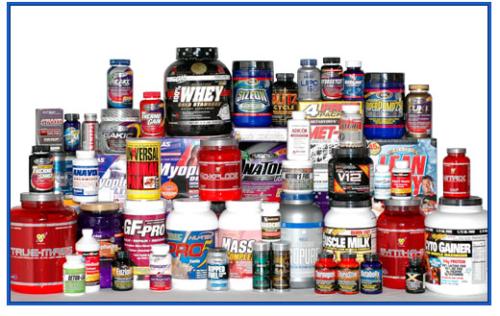
I am going to break this into a few sections. First, I will be dealing with general vitamins, minerals and similar products that relate to nutrition and dieting. Then I will go into three sections that highlight pre, intra (or during), and post workout related supplements. If you are looking for anything about proteins, skip to the post workout section.


Vitamins and minerals are an important part of the operation of our body’s various systems. Common vitamins such as A, B, C, D, and E are very beneficial for our health. While we can obtain them from certain foods and even our environment, sometimes a multivitamin will provide us with a consistent intake. Also, anti-inflammatory and pro-health supplements that are found in nature, such as turmeric and curcumin are low risk options. For more information about those, check out Monica’s Health Mag.


I recommend a few “multivitamins.” First, Kirkland has one of the only USP verified products on the market and it is very affordable. Emergen-C is a different means of consumption (a powder that is mixed in liquid) but you need to be aware that it is believed that it can be harmful to the enamel on your teeth. For those that are training hard, Universal Animal Pak is a more serious product that contains 11 pills in one “half-serving.”. I would recommend those products over other brands for performance and value.
 
Creatine: This is an organic acid that is present in vertebrates. That means that is a natural compound that is already inside of you! It’s purpose is to provide energy to various parts of your body, mainly your muscles. For anyone questioning taking creatine, please recognize that it is not a high risk product if taken properly and it can have positive results on your growth and development when paired with an effective physical fitness routine. I would recommend taking Optimum Nutrition’s Micronized Creatine Powder. It is a simple monohydrate, more natural and basic essentially. Try to take it in six week on and off cycles, performing a loading stage the first week and a maintenance stage for the next five. In the loading stage, take one scoop (teaspoon) with every macro or major meal, and one heaping scoop post workout. (Realize that many pre/intra/and post workout supplements also contain creatine.) During maintenance, take a scoop post workout.


Pre-Workouts: Many of these products contain various vitamin b, amino acids, and what I will refer to as aerating compounds. They essentially get more air to your blood and provide you with a placebo effect pump up feeling. I am not the largest supporter of these products and the massive amount of them that exist. They conveniently affect everyone differently. Even if it only makes you think that it is working, that might help your workout. They can potentially reduce lactic acid buildup, allowing you to perform more repetitions and further tear your muscle fibers before fatigue sets in too far. I recommend Cellucor C4 if you want one that tastes better. MusclePharm Assault is another one that tastes alright and is more effective. If you want a better value, try Jack3d. Try to stay away from lemonades and fruit punches, they usually taste worse. Usually stick to one scoop, but follow directions. I like to take these on an empty stomach, but I have a sensitive stomach so it’s up to you.


Intra-Workouts: Again, I am even less of a fan of these products. They are very similar to pre-workouts, but they provide you with more carbohydrates and electrolytes to help you maintain endurance based strengths throughout a workout. These are more useful for longer workouts. I recommend Cytosport’s Cytomax. Ask for flavor recommendations, but they are all relatively good in terms of taste. Take one scoop for an hour-long workout, or two for a two-hour long workout. Make sure you double your amount of water if doubling scoops.


Post-Workouts: Protein supplements are the reason this article was written. I recommend that you eat a gram of protein for every pound you want in your goal weight. I want to weigh 225 pounds again, so I shoot for at least 225 grams of protein a day. Sometimes that can be hard to achieve on a certain budget or with time restraints. Protein powders provide a reasonably priced and very dense protein serving, and they usually have other vitamins, minerals, and amino acids as well. Thus, you can quickly hit a protein goal by making a shake with these powders. I prefer eating real foods for protein, fish being my go to.


Nevertheless, if you are looking for a more complex and tasty product, I recommend Cytosport’s Muscle and Monster Milks. BSN’s Syntha-6 is a good value, mixes well, and tastes alright. For the purists out there, I would stick to Optimum Nutrition’s Isolated Whey Protein and Isolated Casein Protein. Now, it is up to you, but do not try the crazy flavors like Cookies n’ Cream. They are awful. Stick with chocolate or vanilla, depending on your preference. Moving backwards, whey protein is derived from the process of making cheese while casein is more so derived from the milk of mammals directly. Whey breaks down and is processed faster, so I usually take it during the day. Casein processes slower but is still protein packed so I usually take it before going to sleep. Get both if you’re super serious, or whey if you’re starting out easy.


A post for dieting and nutrition will be made in the future and it will go more into depth of how these products can fit into your diets. For now, here are just introductory tips and product recommendations.


Cheers!
spacer

Gift from the East: Tiger Balm

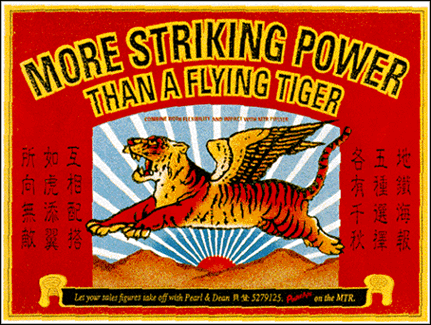
History Lesson: For thousands of years, tiger bones were used medicinally in China. In the late 1800s, a dying Chinese man asked his sons to complete his life’s work. The Aw brothers completed the herbal mixture known today as Tiger Balm in Burma. Manufactured and imported from Singapore, Tiger Balm now contains menthol and camphor as active ingredients, as well as four other oils and some other ingredients to add volume. It’s named after the man who helped develop the marketing strategies that made Tiger Balm so popular throughout Asia, and it’s made its way to the United States.

 Tiger Balm
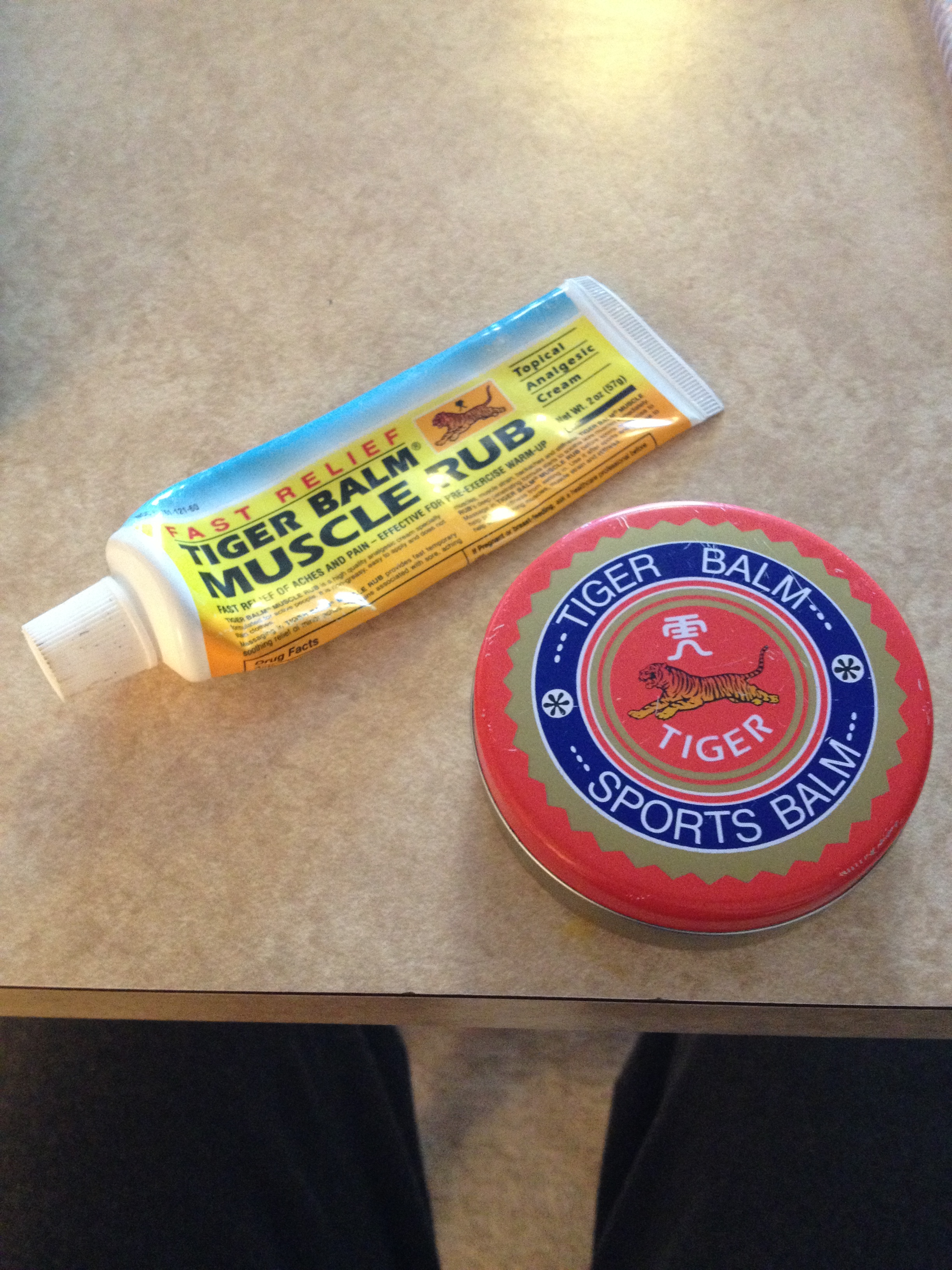
Why do I know so much about Tiger Balm? Because I use it for everything, nearly everyday. I buy it in bulk online and there are many different products for different purposes. The three that are in the house right now are: Large Pain Relieving Patch, Fast Relief Muscle Rub, and Ultra Sports Balm.

If you have congestion, put some under your nostrils. For a cough, apply it to your chest and throat. Headache, put some on your neck and temples. Stomach aches and digestive problems, apply to your abdomen. Even put it on really bad mosquito or fly bites to relieve the itching sensation.

However, the reason I made this post because this is hungry and fit, is related to muscles and working out. Aside from the other specialty products like shoulder and neck rub, red, white, arthritis, etc. the three listed above are the ones I prefer from experience.

Tiger Balm Muscle Rub: Before workouts, I apply a small amount to my muscles that are going to be pushed very hard. I massage it in vigorously and allow the cool burn to set in before starting my workout. I use it before strength training, hard runs, really anything very intense. I also use it before swims even though you’re not supposed to mix these products with water, i.e. showers and swimming without some time in between. If I have any muscle pains while standing (see glossary), then I’ll apply a bit if it’s a knot or something acute.

Tiger Balm Sports Balm: This is my drug of choice, since I don’t drink alcohol (more than one serving), smoke cigarettes, or do any actual drugs. This is what I apply to various body parts when they are not feeling well, see the list above. I also apply it to my joints in a generous amount before a workout. I will also treat joint pains with this while standing. For a leg workout, I will apply this to my knees and ankles. I would recommend everyone keeps it away from their pelvic/groin/hip area. This product burns much more and is VERY pungent.

Tiger Balm Pain Patch: I use this for when I am in extreme pain, typically in my lower back, or any part of my back really. Sometimes I will throw one on my stomach if I’m in extreme pain. They stick relatively well, but don’t last for extremely long, so don’t try to walk around with one. Although, if you’re using one of these you shouldn’t be walking around.

So, I recommend trying something different and going on Amazon and buying some Sports Balm at the very least. I honestly believe everyone should have a tin of this. If you’ve been lifting heavy for the first time and you’re form isn’t great you’ll start to develop early tendonitis like symptoms. Throw some of this on your elbows before hitting the bench press again and keep those elbows tucked in, and you’ll feel much better.
spacer

The Guide to Knowing When to Workout or Not While Sick

Perhaps you’ve recently picked up one of the many thousand illnesses that seems to be going around. Throughout my family, there has been the flu, the cold, costochondritis, bronchitis, Bell’s Palsy, and more! This is really making you want to spend time with us, right? Anyhow, so you’ve picked up a bug, the cold, something and you’re wondering whether to workout. You were all set on your New Years Resolutions and then you get slammed with a cold, but you still want to keep up progress. What do you do?

Chris with an 104 fever during our vacation

Chris with an 104 fever during our vacation

It depends. It depends on what you have and what your body is able to do. Say it’s the first or second day of your sickness…that’s going to be hard. Let’s go through a few sicknesses going around…

Poster encouraging citizens to "Consult y...

Poster encouraging citizens to “Consult your Physician” for treatment of the common cold (Photo credit: Wikipedia)

You have the common cold. You are feeling tired, stuffy, head pressure, and congestion. You may be wheezing a little, sneezing a ton, and coughing a few lungs out. With colds, you can workout depending on the severity of the cold. Like I said earlier, it depends on what day you are on the cold and how severe it is on your body. If you can barely lift your head off the pillow, don’t workout. Instead, rest the day and maybe in the late afternoon, bundle up and go for a walk around the neighborhood. It will wake your body up a little bit and give you a chance to breathe fresh air. 

English: Mimi & Eunice, “Viral Patent”. Catego...

English: Mimi & Eunice, “Viral Patent”. Categories at the source website: Economics, IP, Suffering.  Photo credit: Wikipedia)

Say you’re sluggish, may be a little congested, do a workout that fits your condition. Feeling really stuffy? Don’t do heavy cardio. Instead do a light bike workout and then some strength training. It is vital vital vital to keep hydrated and take plenty of rest time, even if you normally don’t. After your workout, you will leave feeling a bit more refreshed and revitalized. However, stay warm especially if you sweat. If you feel like you can’t do something, then don’t do it. This is a vital time to listen to your body.

You have the flu. Now this one is a bit more risky. It is, again, very dependent on how bad it is. Say it’s the flu without any stomach problems. However, if you have a fever, do NOT workout. This will completely throw your body off as it is desperately trying to fight off the infection (thus, has a raised temperature). You will be helping to defeat your body’s immune system if you workout with a fever. However, if you’ve gotten your fever down to a reasonable temperature (98 degrees region), go ahead and do some light workouts–slow cardio and light lifting. Only if your body is up to it.

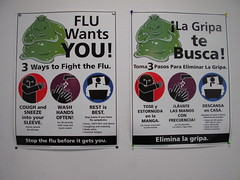
Flu Wants You!

Flu Wants You! (Photo credit: alachia)

You have the stomach flu. This should be a no-brainer. DO NOT WORKOUT. You don’t want any…accidents coming out of either ends while you’re on the elliptical or the leg press. Stay home, drink fluids, and eat crackers.

In general, if you are going for gains in muscle workouts, don’t workout while sick. Why? Because when you are trying to gain that mass, or create lean muscle, you are breaking down muscle fibers which will then need to be repaired through your body. Your body will need to go through protein synthesis to repair these muscle fibers and guess what? Your body can only do so much at once. When you’re healthy, your body can devote 90% to repairing itself. When you’re sick, maybe only 10% can be devoted, leaving you not only feeling sick, but incredibly sore and unable to workout because your muscle fibers are still torn.

English: Overviw illustration of Protein Synthesis

English: Overviw illustration of Protein Synthesis (Photo credit: Wikipedia)

Listen to your body and be smart! You can always make gains next week. 

I'm on your computer, stealin your files

I’m on your computer, stealin your files

BONUS KITTY PIC

spacer

11 Ways to Maintain or Lose Weight Throughout the Holidays

The holidays are never easy for those trying to maintain or lose weight. Never ever. You’re typically surrounded by family shoving food in your face like ham and cookies. We’ve created a guide that you should follow to weather this tumultuous season. Let’s stay on track!

  1. Exercise or MOVE 30 minutes a day. Minimum. That sounds like a lot. It’s not. Walk the dog, take a brisk walk round the neighborhood, scrub the floors, hop on the treadmill or elliptical. You can even pick up a light sport such as golfing, cycling or even hit the gym for a few weeks. It is worth it. 
  2. Limit yourself to 2-3 treats a week. This plays a big part in maintaining all of your progress. Don’t binge on treats all the time, it’s about moderation.
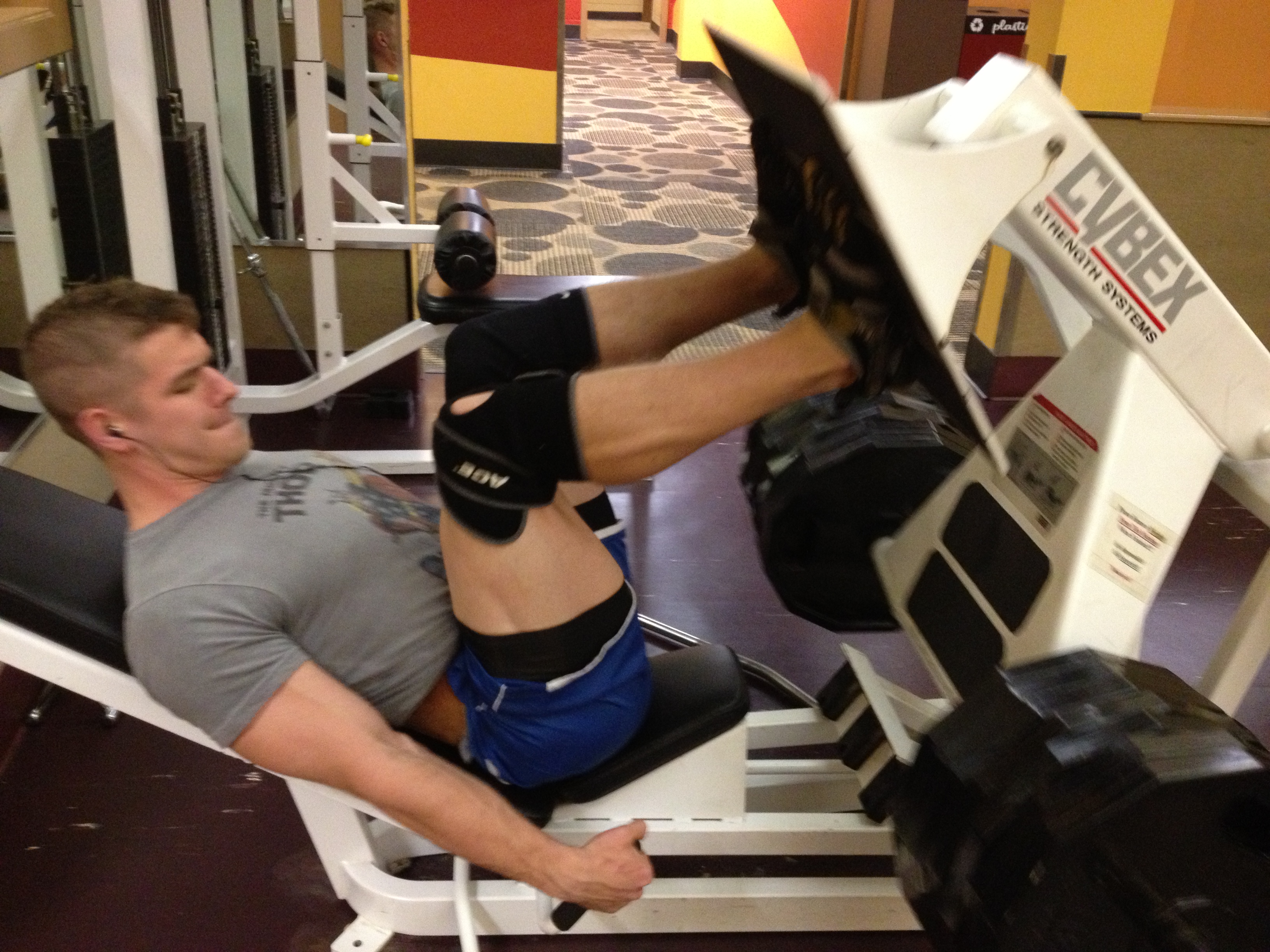
  3. Strength train 2-3 times a week. Whether that means getting on the floor and doing core work, picking up weights, or using machines in a gym facility, get your muscles working. Keep up the toning and strength work. We want to keep burning calories after our workout! Chris pumping some good weight
  4. Resist temptation most of the time. Say that pack of oreos or that ice cream sundae is looking fabulous. Try to resist as much as possible, but again, have a treat now and then. When you resist the cookies, supplement it with something else like banana and peanut butter, greek yogurt, crackers and peanut butter, or fruit. Still tasty, but tremendously better for maintaining your progress.
  5. Get your friends and family in on the exercise. Think of how funny a plank or push up contest would be with all the folks. Get people to go for walks or jogs with you. Do a 15-minute timed abs routine with your cousins or siblings. Create family time around something other than food–and make it fun. Think how hilarious it would be to see your dad playing Just Dance.  
  6. Look at ingredient labels. If it has anything like “high fructose corn syrup” on it, STAY AWAY.
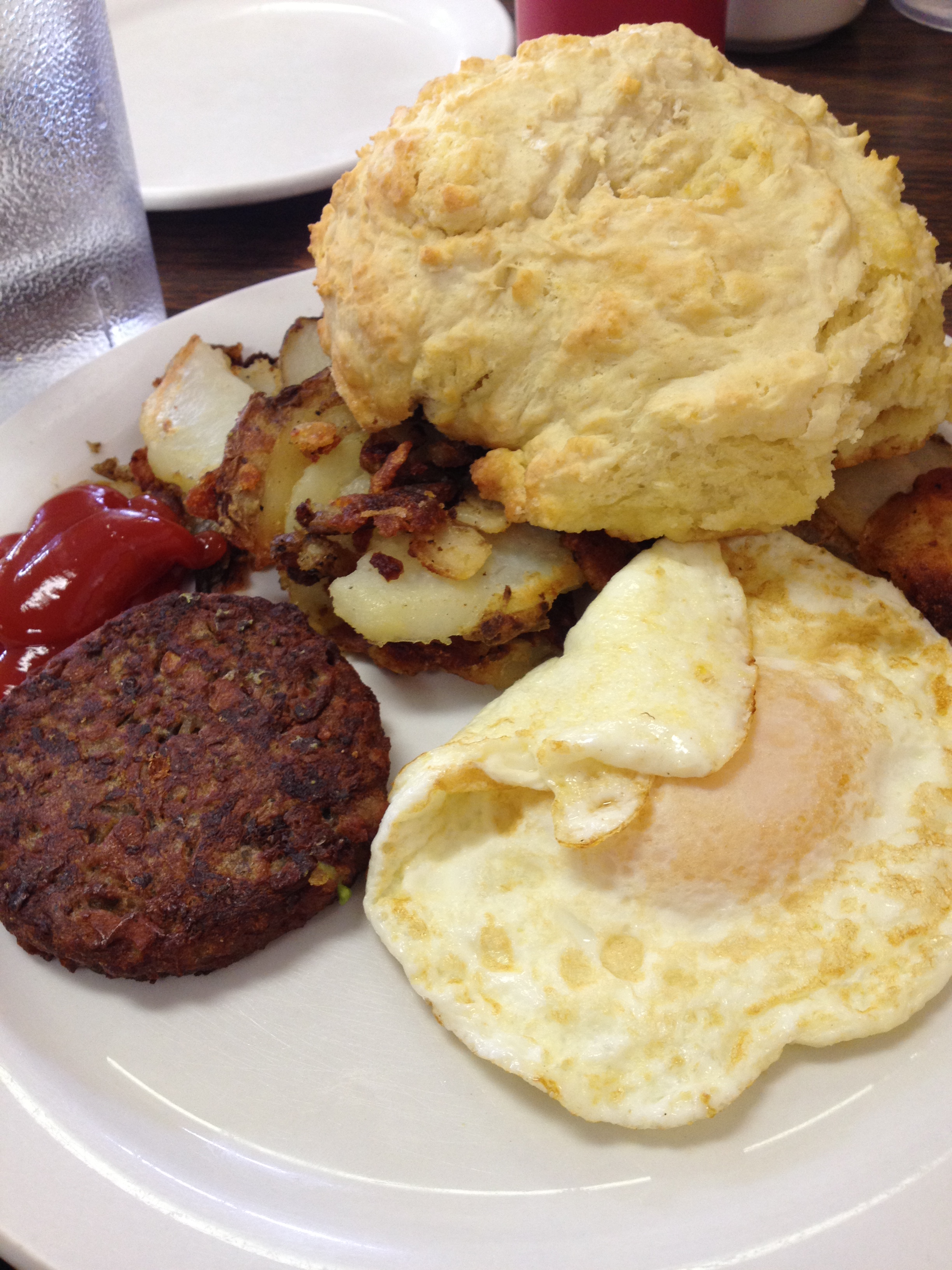
  7. Eat breakfast. A simple simple way to control your metabolism and eating for the entire rest of the day. Not very hungry? Just have some greek yogurt and nuts, eggs on whole wheat toast, or a smoothie. Just to get the metabolism started and preventing a binge-fest later. Alana's typical house breakfast
  8. Control your portion size.We eat with our eyes and then we feel bad if we leave food on our plate. Break that habit and get small servings to start. You can always get more if you’re still hungry, right? Be smart about these choices. Use a smaller plate or bowl. 
  9. Eat often and well. When our glucose levels drop, we usually scrounge for something to satiate it: cookies, chips, ice cream, etc. However, when we eat often throughout the day (every 2-3 hours), that doesn’t happen. Have carrots, fruit, and nuts around the house—easy fix.
  10. When you eat, just eat. Sounds weird, but if you eat while distracted, say, while watching television, you don’t pay attention to your food or how your body is responding to it. Take the time to eat and really enjoy the food. It’s a good meditation and you won’t overeat.
  11. Is it worth it? Look at that piece of unhealthy food. Is it worth it? Is the satisfaction going to last more than ten minutes? What about that feeling of progress with weight or lean muscle? Weigh your decisions (no pun intended). Then reward yourself with a smile and know you did the right thing. 

So there you have it. Not too difficult to follow because you do get some cheats and treats every once in a while. It’s all about moderation. Be realistic,  but don’t overdo it. Good cheer and good luck this holiday season!

spacer

Circuit Training and Why You Should Try It

Ever feel like your workout is stale? Don’t look forward to it because you’ve done it numerous times before? You might’ve even reached a plateau and haven’t been able to achieve new progress lately. Don’t sweat it (lol, get it), it happens to all of us if we don’t change our workouts up. For example, we always switch up the muscle groups and add new exercises. But say you just do total-body workouts, which a lot of people do, and you’re just getting bored and losing interest. I have a solution! 

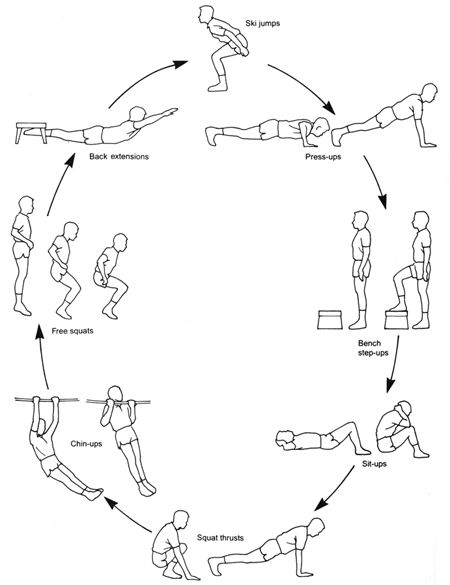
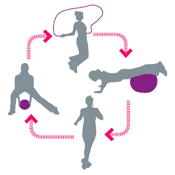
It’s called circuit training. No, you don’t need to be an athlete, a fitness extraordinaire  or even in shape! This will be the pathway to getting there and having some fun while doing so. Circuit training involves numerous stations with little rest time in between. This especially great for people who want to lose or maintain weight because you’re constantly keeping your heart rate up and your body moving. You give yourself a certain amount of time or reps at each station and then move to the next without resting. There are various ways to do this, and you can even do it at home. 

Let me give you an example. 8 Stations:

  1. Push ups 
  2. Supermans 
  3. Dumbbell swings 
  4. Mountain climbers 
  5. Plank 
  6. Curl, shoulder press, triceps extension (one sequenced movement) 
  7. High knees (in place) 
  8. Squat jumps 

You would go through say, 45 seconds of each station and move to the next. It depends on your fitness level. With some of my more beginner clients, I will give them 15 seconds rest between every two stations rather than until the end. I will give you variations at the end. Want to workout at home and don’t have any equipment? No problem.

  1. Squat jumps
  2. Push ups
  3. Reverse crunches 
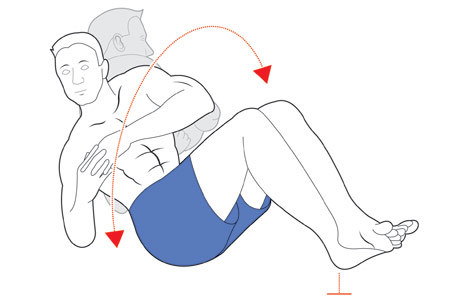
  4. Russian twists 
  5. Jumping jacks
  6. Lunges
  7. Calf raises 
  8. Jog on the spot 

Don’t need any equipment for that one. And you can design the circuit training to fit your needs. Looking for only cardio? Swap the strength exercises (like push ups) for things like jumping jacks, jump rope, high knees, mountain climbers, jog in place, and so forth. Want to focus more on strength? Take out the cardio and add more strength in. Either way, you’re getting your cardio up by going from station to station without rest. Personally, I would suggest keeping both in the routine. Strength and cardio training is important for everyone, I don’t care who you are.

List of more exercises you can do (with and without equipment):

  • Crunches
  • Dips
  • Squat press
  • Plie squats
  • Wall sits
  • Triangle push ups
  • Step ups
  • Shadow boxing
  • Medicine ball throw
  • Chest press
  • Pec flies
  • Skull crushers
  • Jump lunges
  • Hip bridges
  • Burpees
  • Curls

And so on and so forth. There are tons of exercises you can do. You can make your own routine. Pull some of your favorite exercises from the list and go for it. Try to hit all parts of your body.

Beginner: 8 stations, 45 seconds at each station, 15 seconds of rest after each two stations, two minutes rest at the end, complete three circuits.

Intermediate: 10 stations, 1 minute at each station, 15 seconds of rest after 5 stations, two minute rest at the end, complete three circuits.

Advanced: 12 stations, 2 minutes at each station, no rest in between, two minute rest at the end, complete three to five circuits.

Please, try circuit training. At your gym, at your home, outside, wherever! Some advantages of circuit training? I already covered some but I’ll recap: saves on time, encourages fat loss, keeps your heart rate up, effective use of time and exercise, works on all muscles of your body, improves your cardio, and improves strength. Those are just a few. You choose the number of stations, length of time at each station, and how many circuits you have time to do. Challenge yourself every time.

Let me know what circuit you did and how it went! And if you have any questions, please leave a comment below.

spacer

Back to Back… and Biceps… Yet Again

It’s another cover of one of our workouts, which have been getting a little bit better… I hope. It’s been very challenging balancing working 7 days a week and still finding time, with gyms not being open 24 hours, to work out and work out well. Furthermore, it’s been most challenging to not neglect any body parts. Ideally for me, aside from cardio workouts and recreational workouts, I like to focus muscular isolation workouts on legs, core, chest, triceps, biceps, back, forearms, and neck. Combinations can be made freely, but again, ideally once a week with proper rest is a good start… twice a week when we’re in killer shape. Never more than that, especially with strength training.  We’ve been struggling with hitting every body part on a good reliable consistent rotation but back and biceps are rarely missed because of their size, and for now, their role in climbing. So here is my coverage of a decent pull muscle workout.

We hit the gym around 9:30, a little late, we like to get there around 9, and I put some Tiger Balm and Tiger Balm Muscle Rub on my upper body pull muscles and joints. Prior to coming, on an empty stomach, I took 1.M.R. A pre-workout supplement, one scoop a day before my muscle workouts, for nothing else. At 9:37 the fun began, on a day where I was feeling pretty good, a little sore throughout the body, especially in the lower back, and my cold I have now hadn’t hit me yet.

(by the way, as a foreword, before you ask about rest or reps, it’s minimal rest and every set is to failure, seriously)

9:37: Super set 1: (4 super sets)

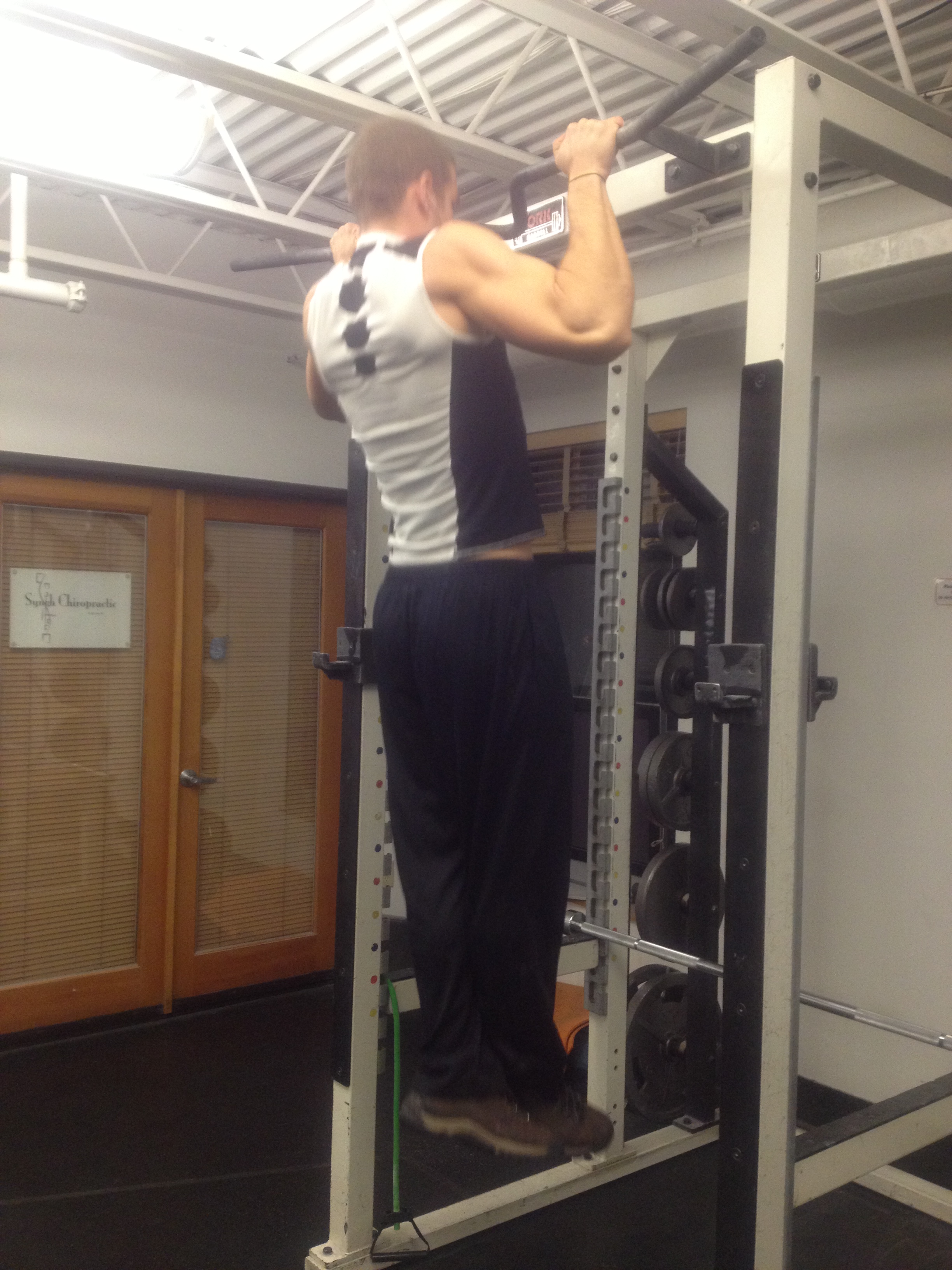
a. Alternating pullups and chinups
b. Seated d-bell lat flyes (it’s the proper spelling, seriously, but I don’t care how people spell it, Alana did standing)
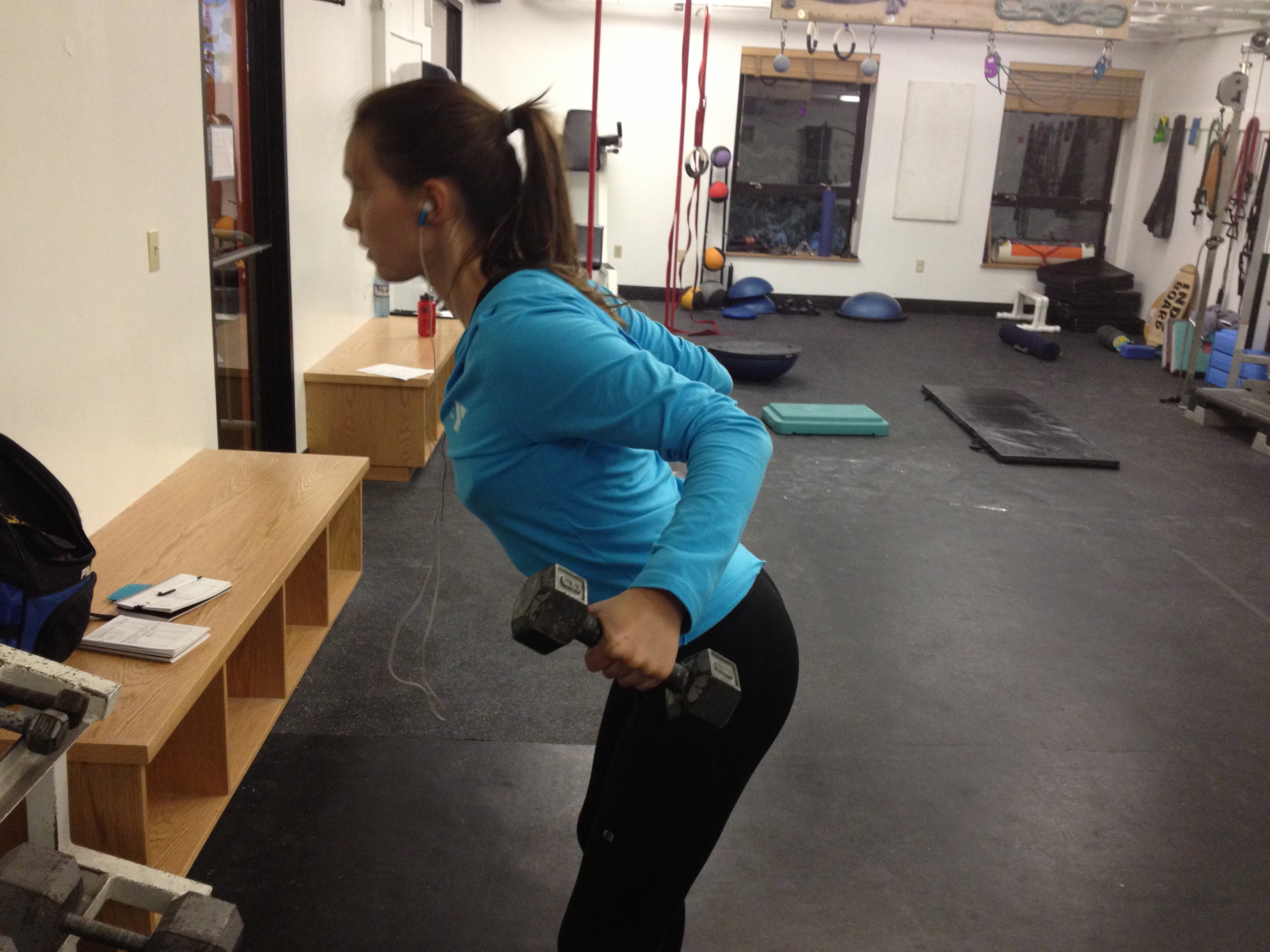
9:47: 2 (4 super sets)

a. lat pull downs (narrowing grip every set)

b. seated hammer curls
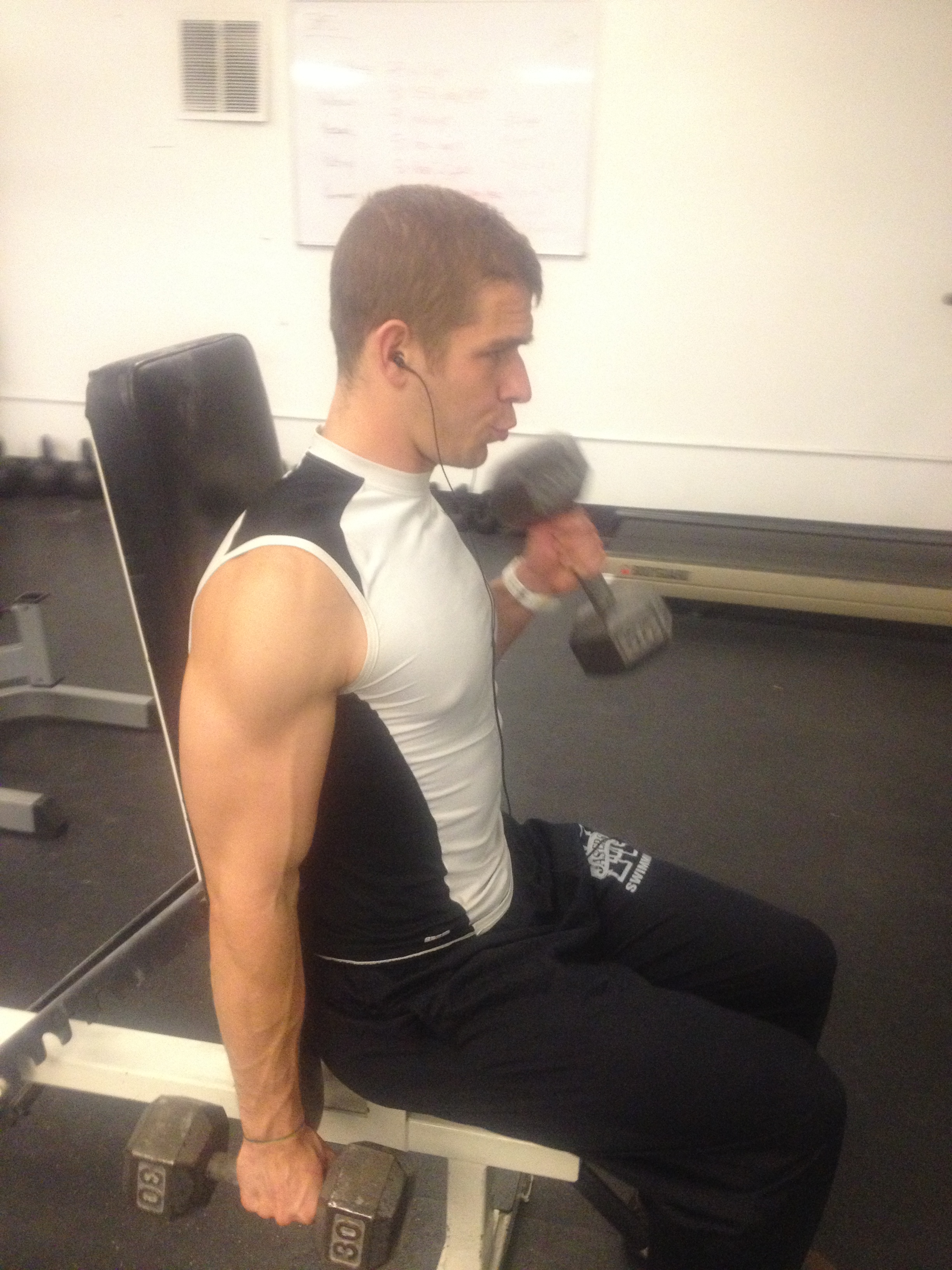
(during this set, while we were swapping equipment because two pieces for two people is more than fair, some gym jerk decided to try to take our incline bench, so I told him to beat it and he did. I was polite)

10:01: 3 (4 super sets)

a. low seated cable rows
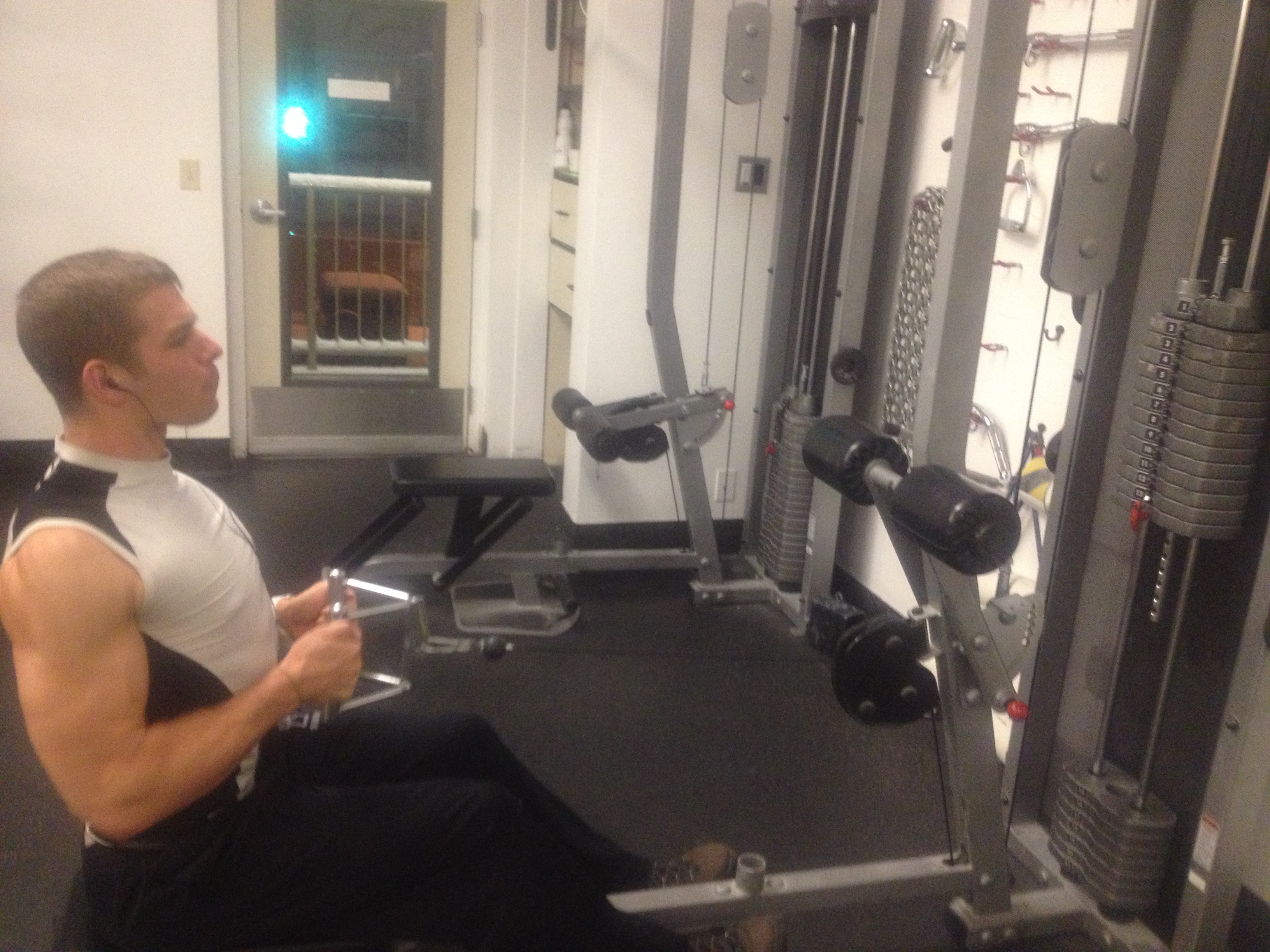
b. incline pinky offset curls (have your pinky be touching the head of the d-bell, so the thumb is around the middle)
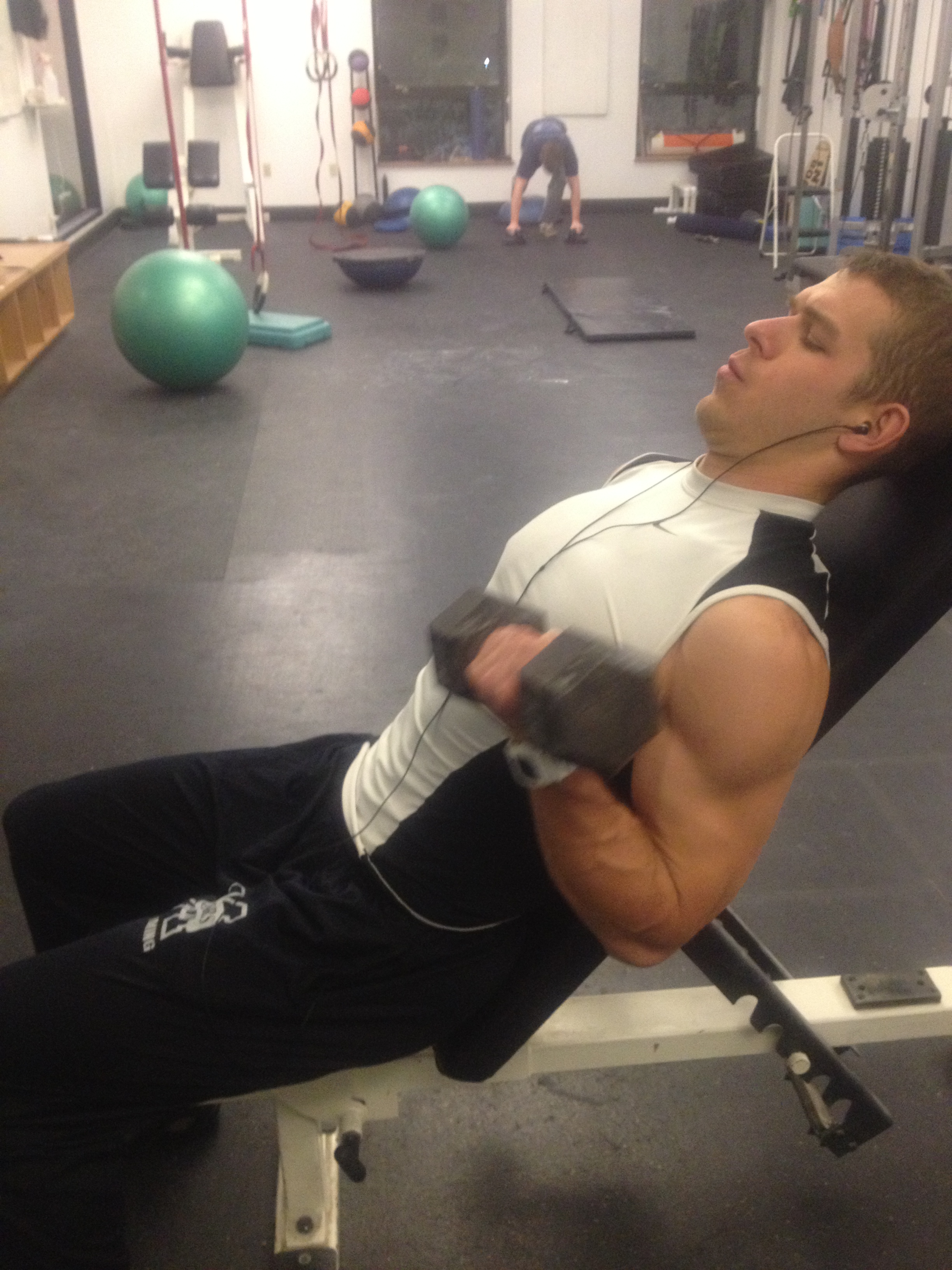
10:17: 4 (3 super sets)

a. kettle bell sumo romanian deadifts
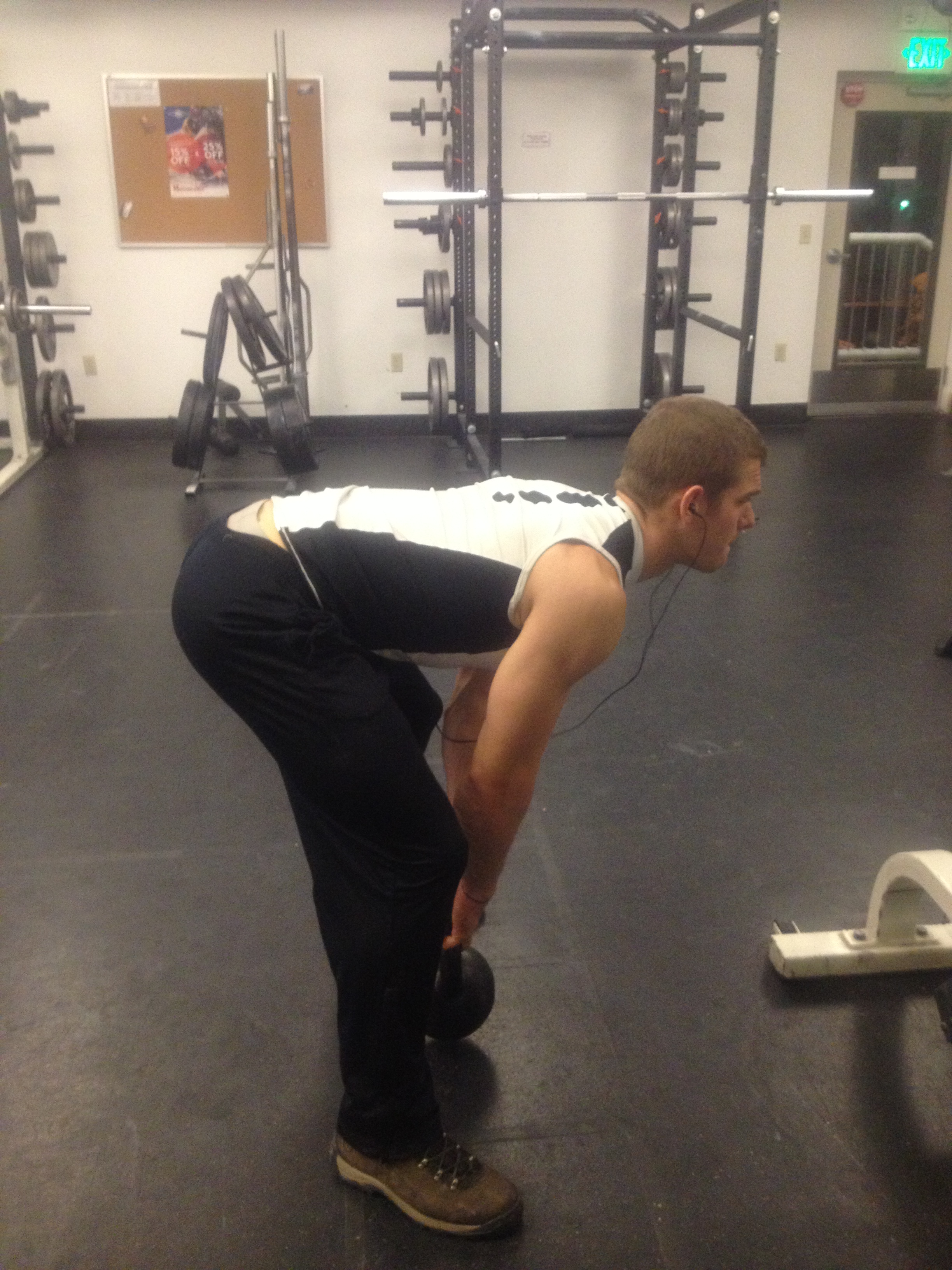
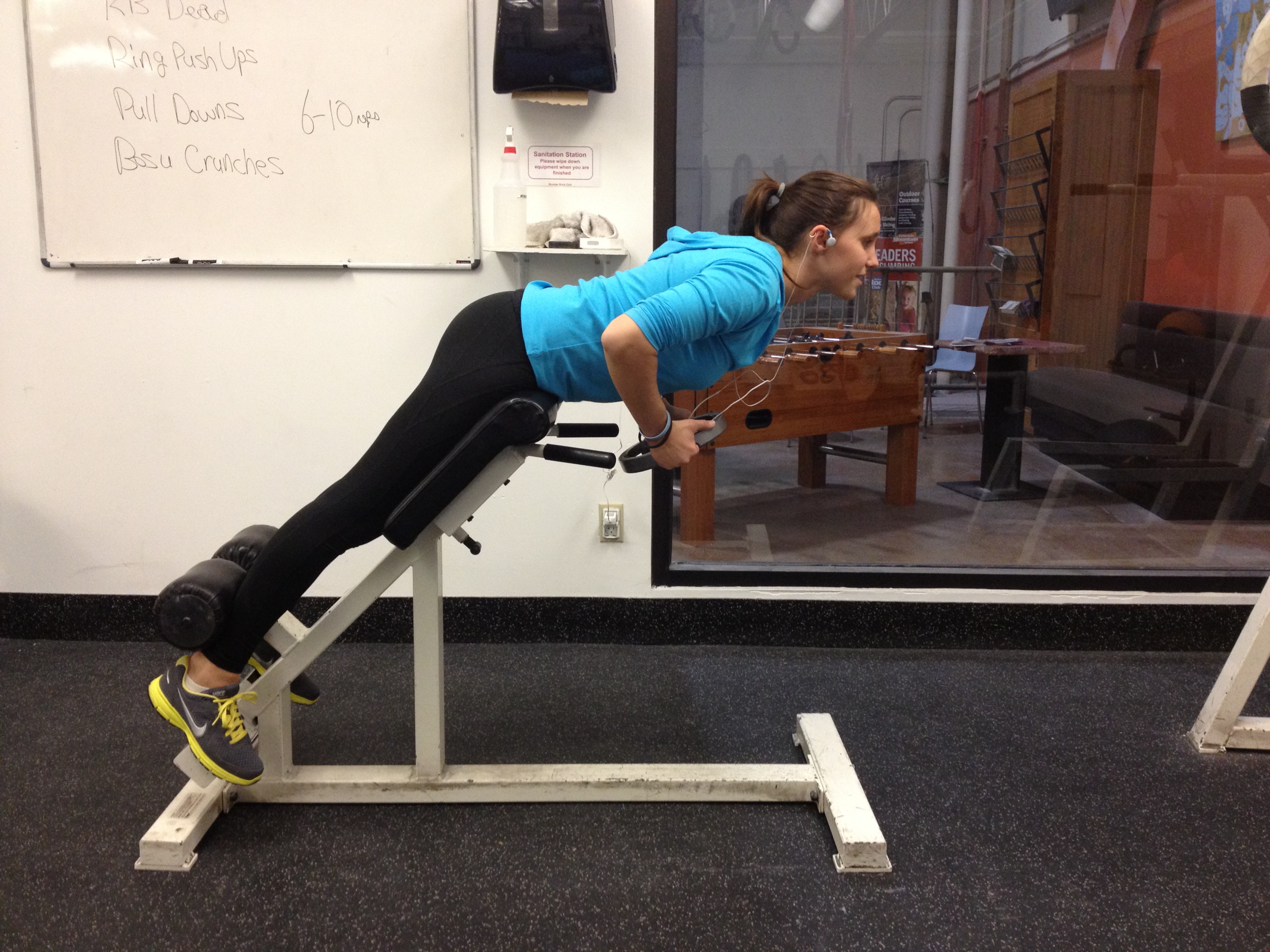
b. back extensions
And then around 10:30, we bouldered for about 20 minutes until my forearms felt like they were about to split. Typically, we get kicked out of the gym, but that day we left a couple minutes early. If you ever get that sensation, just stop.

So now, the reason why I wrote this post was to dedicate a section to bodyweight or near bodyweight lower back exercises. While sometimes I work out lower back with back or legs, it really could be classified as core. Depending what your weekly split is, you can cater your lower back workouts to match those days. For instance,

If you are trying to do lower back with legs, deadlifts and squats are great exercises to focus on good form and strengthening your lower back. Whether it is a romanian dead lift, straight leg, front squat, olympic squat, etc you should focus on good form! If you squat 600 lbs for 1 rep and your back isn’t straight, I don’t count it. You can, but you’re lying to yourself.

You can also use the back extension apparatus that is actually a glute/upper hamstring piece of equipment. Hit a few birds with one stone. If you’re doing shoulders or back, kettlebell swings are a great workout for lower back. But if you’re trying to work body weight, lower back is a great group to focus on with your core.

Back extensions on the apparatus are I think the most convenient one here. It is bodyweight and weight can be added, but it requires a piece of equipment, and if you don’t have it just do…

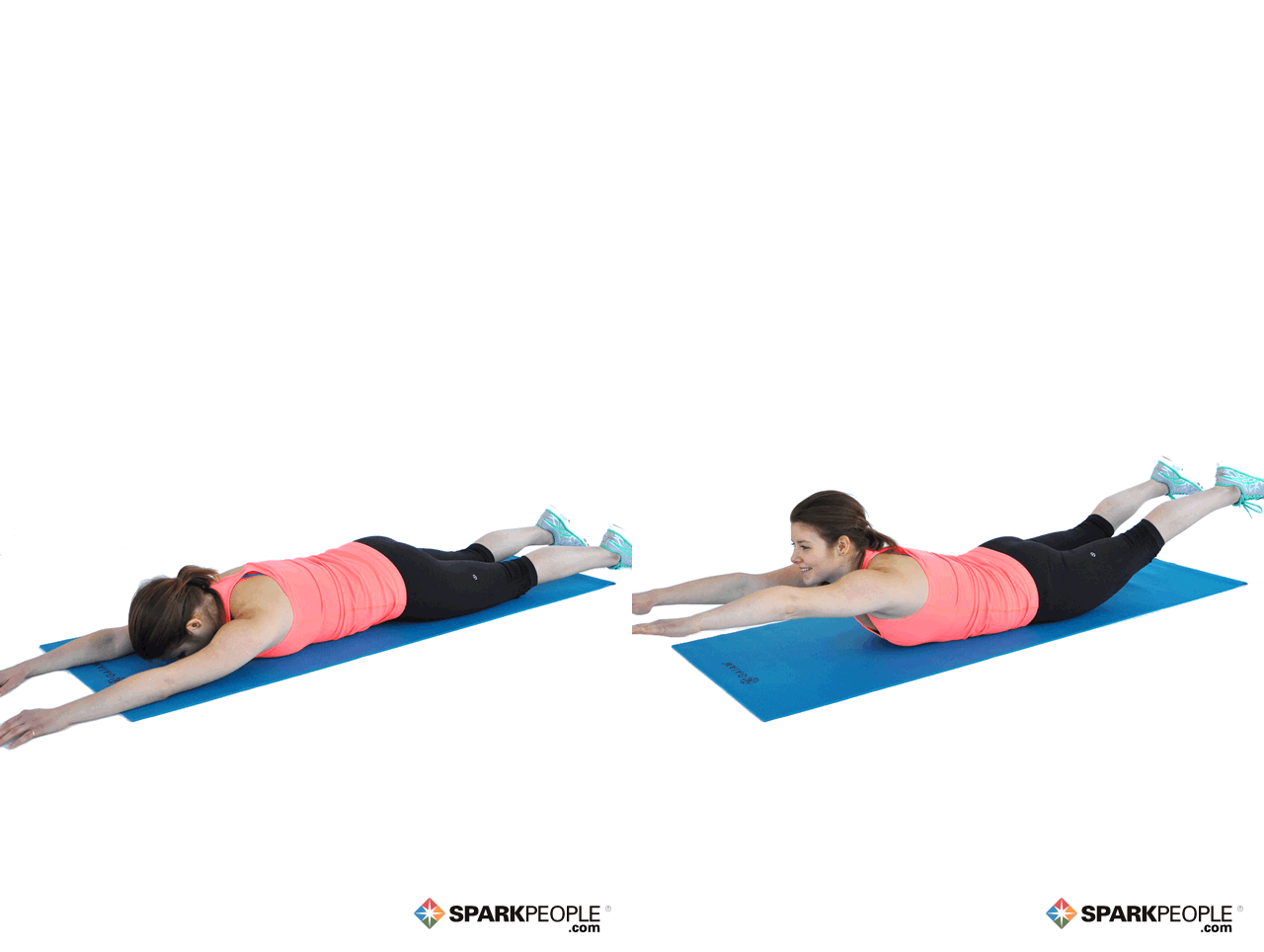
Supermans – laying stomach down, extend your limbs outwards and slowly or quickly contract upwards, then slowly or SLOWLY stretch back downwards to the floor. Thirty reps is a great goal for body weight exercises, especially for your core.

Any deadlift can be done bodyweight. Single leg are the most challenging and if done improperly can hurt your lower back a lot more. I recommend a straight leg romanian deadlift where your only pivot point is at the lower back. Rep it out again with the same execution as the superman.

Never, in any circumstance, bend your lower back or arch it towards your stomach. Try to keep it tight, keep it straight and if anything, but try not to, arch it away from your stomach.

Do a plank, and a side plank on each side. Planks are arguably if done correctly the best core exercises and this includes your lower back. Do not overlook these. Do them for as long as you can maintain proper form, and when form deteriorates, rotate onto your side… or rest! Then repeat.

If you have a stability ball, you can do reverse extensions where you bring the ball into your chest with your feet on it. Keep that spine straight and try to rep it out. I usually shoot for 20.

Don’t forget about bridges. These will be used in some yoga classes. It’s kind of a reverse plank, with your back to the ground.

And on that note, consider yoga poses! Cat pose, cow pose, cobra, scorpion, chattarangaaaaa (or however you spell it). These are difficult glorified stretches that can really work. Just make sure you don’t only do these. I have a thing against just doing “static stretches” but I understand yogis that these aren’t JUST static stretches so stay back.

Any questions?
spacer

Work Those Push Muscles: Chest and Triceps Workout

So there are some workout match-ups that tend to be our favorites. One of those favorites is the sweet chest and triceps pair. It’s a great combination and leaves you exhausted afterwards (my arms are very upset with me now that I am typing). So Alana, you’re probably saying, why is it a good combination? Lemme spit some reasons at ya (not literally, come on).

Triceps brachii, large arm model - Muscles of ...

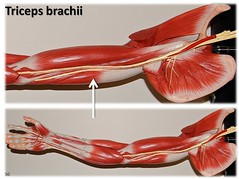
Triceps brachii

1. Convenience: being able to do your chest and triceps at once can really open your workout schedule. This is especially for the people who tend to try to workout every day or every other day. It gives you a few days to work on other muscle groups without worrying about overworking those muscles. Because ultimately, that will lead to injury. And that’s a no-no.

2. Effective: you’re going to get a much better chest and triceps workout if you work them together. If you’re doing it properly, every chest exercise you do will work your triceps a bit and every triceps exercise will work your chest. That’s just how our body works.

3. Power: it makes you feel huge. Think about the strength, effort, and power that goes into benching.

Anyhow, there’s a few reasons for you. Now let’s get to our actual workout. We have a few pictures for you of yours truly.

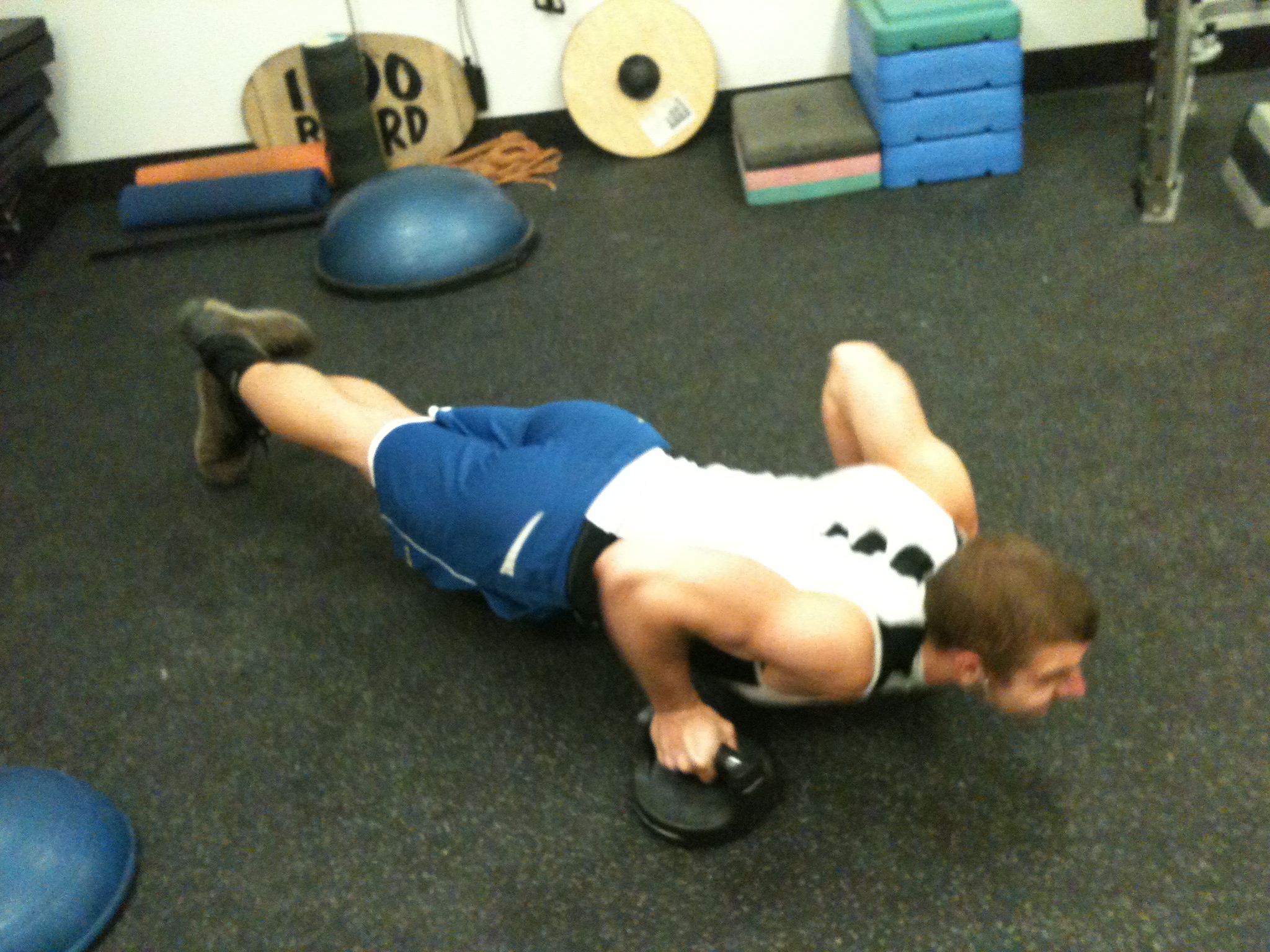
1. We started out with a super-set (one exercise after the other, no rest) of push-ups and triangle push-ups, working our chest in the first and triceps in the latter. You don’t need any equipment for this, so no excuses! Go until failure.

2. Our next super-set was incline chest press and incline pec fly. This really requires good strength and power (especially chest press). Unforunately, no pictures of us doing this. For chest press, you sit on the inclined bench, and push your arms straight up.

For pec fly, get in the same seated position. But start your arms out, like you’re going to give a tree a hug, and bring inwards (you tree-hugger!).

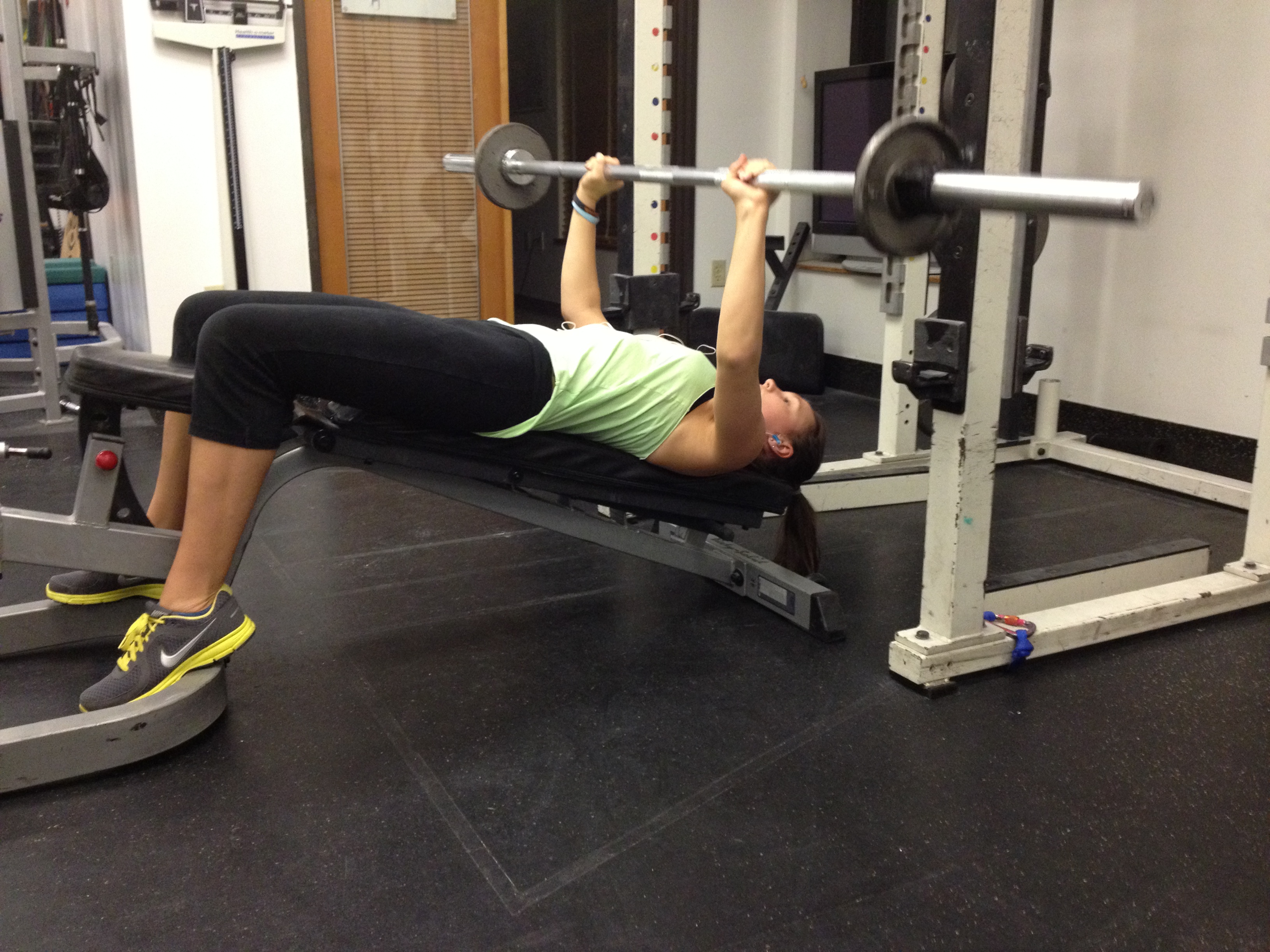
3. For this we didn’t do a super-set, because we wanted to spot each other for bench press. Personally, I’ve lost a lot of my strength, and can’t bench nearly what I used to (you’ll see low weight in the picture, the bar = 45 lbs). It’s just good to be there and spot for each other to get the weight up and getting help getting it down. We did decline bench press. Go for a good weight and, as usual, go til failure.

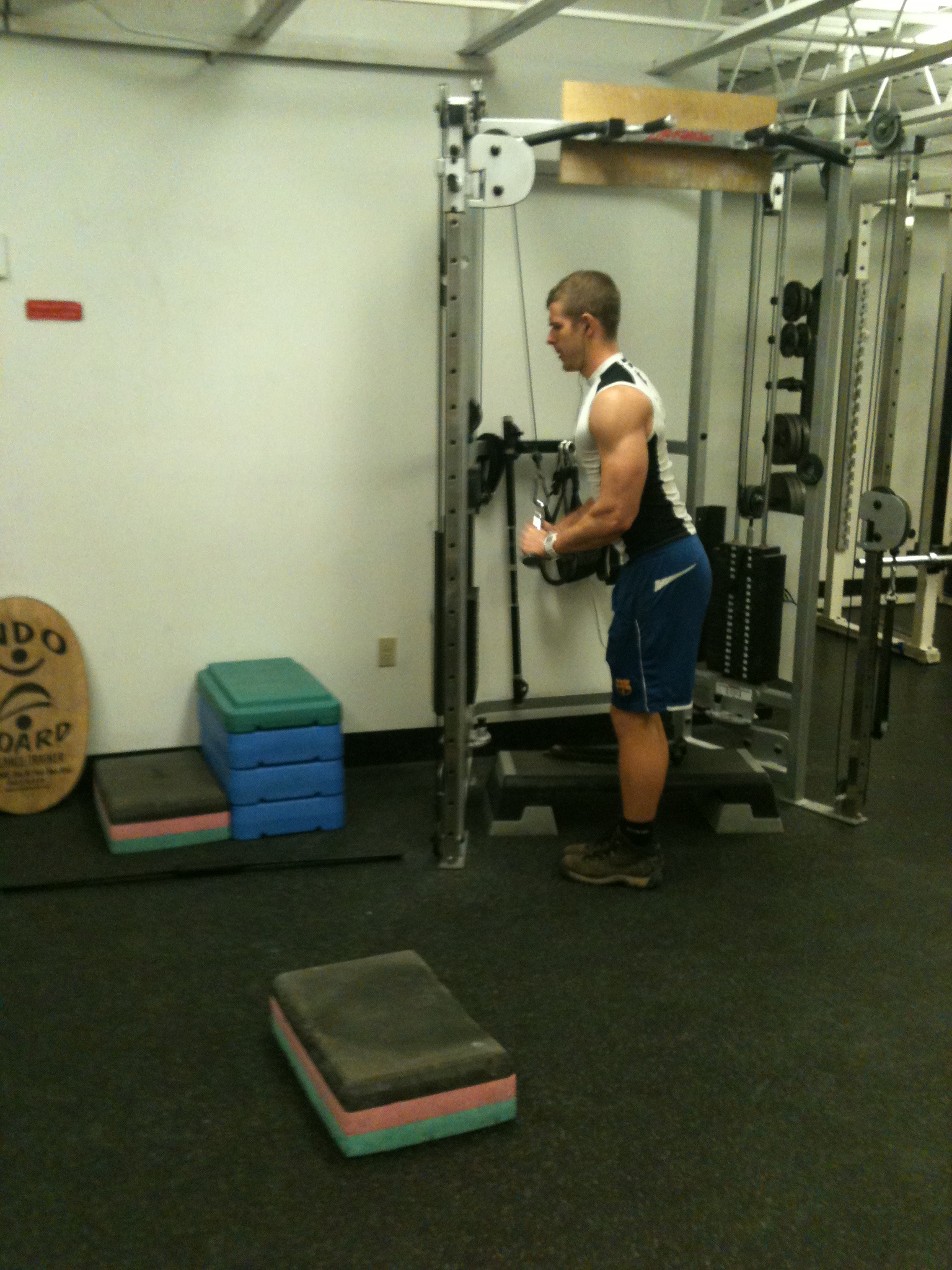
4. For our last super-set we combined triceps cable press and double-hand triceps extension. This really killed our triceps (in a good way!). For anyone uncomfortable with triceps exercises, I find that the cable press is an easy pathway to get comfy with working those triceps. You position yourself with the feet shoulder-width apart, facing the cable, and press down the steel triangle or horse rope down and bring your arms back to 90 degrees.

For triceps extension, grab a good weight and place behind your head and do vertical raises.

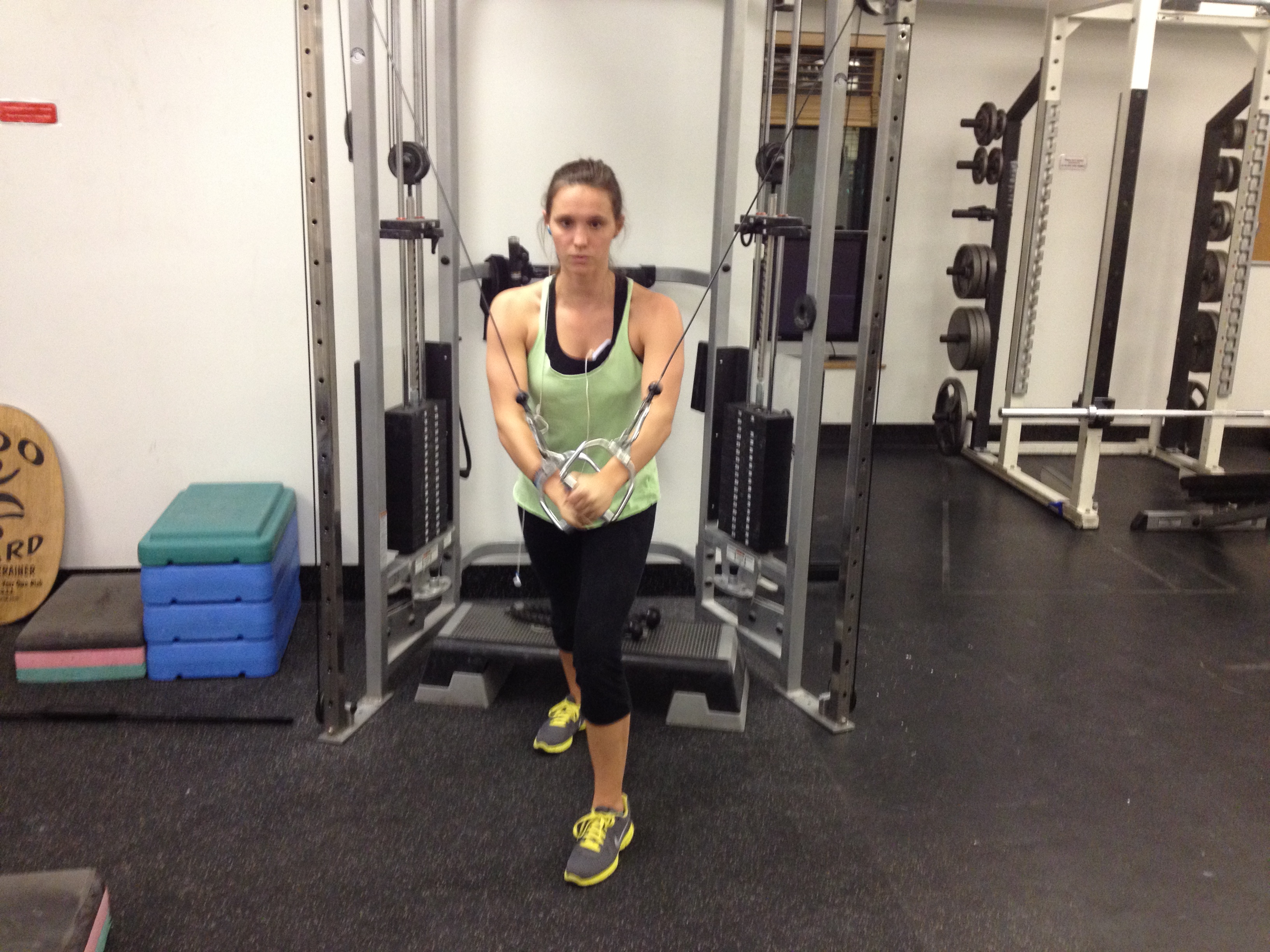
5. And lastly, to end our muscle workout, we did a cable cross-press. This will get a good pinching burn in your chest and triceps. We juiced out the rest of our strength through these. Always go to the end of your workout. Never stop pushing. Unless you feel sharp pains, THEN STOP. Stand away from the cables, grab each cable in each hand and cross over your hands.

For this entire workout, we did four sets of everything and pushed to failure. It could range from 8 to 100, it’s up to your body and your strength. We ended it with some excellent twenty-minute bouldering where Chris finished a new route that had been challenging him for weeks!

Please let us know if you have any questions! Cheers!

spacer

Rest and Recovery Days (We Take A Lot)

Looking at this past week, we only went to the gym three out of five days. Sunday was shoulders and climbing, Monday was legs and climbing, and Wednesday was arms and climbing. (Climbing=Bouldering, until we get more gear) That means that Tuesday and Thursday were more or less rest or recovery days, but this isn’t completely the case. Everyone works out for a different reason. Some people want to feel better, some want to look better, and some actually enjoy it. Although the first two are true for myself, I would never work out as much as I do if I didn’t enjoy it.

Rock climbing on the wall of Voiron, Auvergne ...

Rock climbing on the wall of Voiron, Auvergne Rhône-Alpes championship (Isère, France). (Photo credit: Wikipedia)

Going to the gym is considered a leisurely activity in my daily planner because 95% of the time, a trip to the gym is on the same level as playing video games. The other reason that they weren’t rest days is based on how active one’s lifestyle is outside of designated workouts. On both of those days, I biked over ten miles to and from jobs throughout the day. It was on a cheap mountain bike, and there were lots of uphills and changes of direction and pace. Also, I was in the water for hours treading and teaching children how to swim. I was never moving too quickly, but overall I probably “swam” a thousand yards (I should calculate, or try to, some day.) Finally, everyday I walk a dog in the foothills, and those hikes/walks are usually around 3 miles long. According to my former Taekwondo master, hiking is the greatest form of exercise in the world… even greater than taekwondo. (He is an 8th degree black belt)

Hiking Symbol

HIKE OR DIE

So never feel bad about taking a day off from the gym! Especially if you have an active and healthy lifestyle. Many people don’t realize just how active they are! Do you clean the house? Pick up your children and carry them around? Mow the lawn or garden? Walk the dog? Shovel snow or rake leaves? Walk up and down stairs all day? All these activities can be extremely taxing on the body and while you might not get the same effect of lifting weights in sets and reps, you can still get a heck of a workout from it.
Houseworks

Houseworks

Furthermore, rest is good as long as you don’t take too many days off it you’re trying to reach a certain goal. Some studies show that you won’t lose muscle gains for eight days, and cardio gains for three days. Now, I would not recommend taking more than two days off in a row because that should be enough recovery time for your muscle fibers, but don’t be too hard on yourself for taking some rest!

Collage of varius Gray's muscle pictures by Mi...

LET THOSE MUSCLES REST

Letting your body over-recover is much better than not letting it recover. You want those fibers to undergo fancy scientific processes like protein synthesis so that they come back bigger and stronger. Skip the process, and risk losing the growth that you worked so hard for. Working out, eating right, and sleeping right are the easy parts… your body is doing all the hard work, just get your mind in the right place. Never be too hard on yourself (I can’t take my own advice) and always try to enjoy what you’re doing. Working out every day, or nearly, for four years is really boring, unless you love the pain and struggle.

Keep up the good work!

spacer

Imitating a Table: How to do the Perfect Plank

I hate nothing more than bad form when people plank. Okay, that previous sentence is ridiculous, I hate many things more, for example, olives (maybe). People do this in all sorts of exercises, rush to try to get the “best pump” or the “longest duration” and completely compromise their form. I don’t know how many times I will tell you this, but this will not be the last.

(taken from this blog)

Form is more important than any other part of the exercise or workout. 

You screw up form, you screw up your body. It’s very simple. Yet big meatheads or beginners too will push past that to either try to get heavier weight or have no clue what they’re doing. So this will not be a long post. I just want you to perform a plank (one of the best core exercises, reaching the entire core from the upper thighs to the upper abs and everywhere in between.

1. Don’t wear socks. Just don’t do it, there’s no reason, even if your feet are smelly. Take them off or plunk on some shoes.

2. Put your forearms down flat on the floor, in a comfortable position, lining up with your shoulders

3. Ease your legs back, ‘standing’ on your toes

4. Lower your torso and upper legs, so you’re not making a ‘bridge’ with your body, but a nice flat terrain, hmm, somewhat like a plank a pirate would force you off.

5. Hold for as long as possible. Beginners, 30 seconds. Then move to 1 minute, then 2 minutes, then 3, etc. etc. You get the point.

Other tips:

  • Don’t stick your butt up
  • Don’t lower your hips
  • Don’t lower or raise your head
  • Keep tight

There are variations, too, like side-plank, watch-dogs, and twists. But remember GOOD FORM IS MORE IMPORTANT THAN ANYTHING ELSE!

spacer

Core vs. Abs: the Smackdown

Many people are obsessed with doing abs. What they don’t know is that they should be obsessed with doing core instead. So what’s the difference?!

“Abs” refer to a part on your torso. The rectus abdominus and the obliques are what are targeted when people say “abs.” Sometimes, it doesn’t even include the obliques.

Ignore the body shape on the bottom, I know he’s scary. 

So…then, what is core?

I’ll leave it to Chris to rant now.

So basically, we can look at this conceptually, as what we’ll refer to as our “abs” and then our “core.” For abs, I am referring strictly to the upper abs, lower abs, and we’ll say side abs, or–more fittingly–obliques. Then we have our core, which is much more important, and we’re going to include everything in our “mid-section” that acts as important stabilizers for strength and balance in either strength-training sessions or fully-interactive sporting sessions. So let’s break down the abs first.

Basically, as we already mentioned, we will look at and focus our workouts to our upper and lower abs and our obliques. Now, there are two major ways to workout abs when we focus a workout on them. First, is what I would think as the more common method, doing as many repetitions of as many abs exercises as we can find in magazines and online. Let’s do 3000 reps, 30 reps of 10 different exercises ten times over in an hour. I hear that one a lot, and I’ve done it a lot. 9000 reps on serious days. Will this work and will you feel it the next day? Sure, you probably will. But you could also feel some serious pain in your lower back or have a bruised tailbone if you don’t make sure that you are spot on with form and focus for thousands of reps, which is not an easy task. While you don’t need weight to train and break down those muscle fibers, it does help in its own ways. And while this is a great endurance workout that can really get your heart rate jumping, there is another way of working out those abs.

The alternative I speak of is strength training your abs. Abs are a muscle group, just like biceps, quads, lats, etc… so of course you can train them with a little extra resistance. I am not offering workouts here, just stating how I feel on this matter, but I would still keep rep ranges relatively high, over that 15-18 rep mark, going still towards 25-30 reps per set. So please, don’t take this as a suggestion to max out on an ab exercises. If I had to choose one exercise for each of our three ab groups, to do 25-30 reps while increasing my weight each set for three total sets, it would be: a kneeling cable crunch for upper abs, a weighted reverse crunch with our legs in a declined position for our lower abs, and an inverted weighted twist for our obliques.

Don’t yell at me if you do these wrong and they don’t work because I’m not putting my actual workout up for another few weeks when I’m a little more back in shape. (FYI, your obliques are a muscle group that tapers from the side of your body towards your hip area, and if you were to “bulk” these up through strength training there is a great chance that your waist size would increase, making you look thicker, just a side note) But I wouldn’t leave it as this, because I personally don’t ever do abs… EVER… I always do core, and this is why:

As a former athlete that works out not to feel good, or for appearance, but for performance, I know the importance of maintaining a strong core. I consider my core anywhere under my chest down through the upper leg. So to be in more detail, muscle groups that I hit when I do a core workout include: upper abs, lower abs, obliques, lower back, hip adductors, hip abductors, and even upper glutes. While I will isolate these muscle groups with free weights, and unfortunately on some machines (mainly for hips) , I always try to incorporate them on some heavier and more complex exercises.

For instance, when I do firemen carries with friends, it is a leg workout picking them up waking with their weight, and it is a shoulder workout holding them in place, but it is also a GREAT core workout trying to keep all those muscles in your abs and lower back tight to stabilize your body throughout the workout and prevent any injuries and accidents. Deadlifts, romanian deadlifts, and squats really require you keep that core tight and that form precise in order to target your muscles properly. Most hanging core exercises require that you do not swing so that your core finds that stable position, making you constantly work harder.

Stronger core means stronger everything else.

Someone could have a massive set of legs, but when they put that loaded bar on their back and try to squat 600 lbs, their lower back might want to snap causing them to lean to far forward and not only fail to complete a rep, but also potentially and likely hurt themselves. Watch the crossfit fails video on YouTube and you’ll know what I’m talking about. Crossfit will be a serious rant post, and total immersion swimming, but back on track.

And remember, my favorite way to work out core is integrate it into something FUN, like sports. Rock climbing, swimming, soccer, frisbee, football, baseball… really any sport at any competitive (meaning people are actually trying) level is an amazing core workout, and you don’t even have to count reps, because it’s so integrated in what you’re doing. One of the recommended doctors that contributes to Men’s Health in some issue over the past few years said his favorite lower back workout was pickup soccer (we’re in the US :/). Strengthen that core!!! Abs will come naturally if you do.

And finally, since this is all over the place, and I think I hit most the points I wanted to… if you’re trying to go from not having any visual abs in a pack to a certain goal like a six-pack you need to consider everything. In no particular order…

  • Build the muscles through strength training so that they are there and defined, wanting to be seen. 
  • Cut the fat covering those nicely defined muscles through PROPER NUTRITION (SO IMPORTANT!) and fat burning exercises (CARDIO TO THE NEXT LEVEL) so that you can see those nicely defined muscles that you built through strength training.
  1.                   a. Proper nutrition means stop eating garbage. I’m not asking you do some silly diet like cut carbs completely. Just eat  healthy, and if you don’t know what that means, then ask.
  2.                   b. Fat burning exercises doesn’t just mean putting on three sweaters and hitting the elliptical. Sweat all you want, a lot will just be water weight. Seriously, get a trainer or join a class where someone can observe you if you have any health concerns and go to a point where you want to throw up. But do not be reckless, always stay in control. It’s all about confidence.

Do what you need to do in order to strengthen that core and look and feel how you want.

spacer