Health

I’ll Need a Bigger Helmet: Biking in Boulder

This will be a quick one, mainly because we had long days and have an early day tomorrow, but also because I don’t have much to say about this, or perhaps I actually do and want to prevent an all out rant.

Essentially, again today on the way home from work I almost got hit by a car… in the sidewalk. I’m a responsible bike rider and good on my bike. I ride it at least 4 days a week, typically more. Some days I only ride it 2-3 miles to and from work but some days, doing multiple jobs, I can ride up to 12 miles a day. These are all commuting miles, on a mix of flat and graded terrain, typically sidewalks and roads. I have an old Trek mountain bike that has been transformed into a commuter bike and I custom fit it to meet my needs.
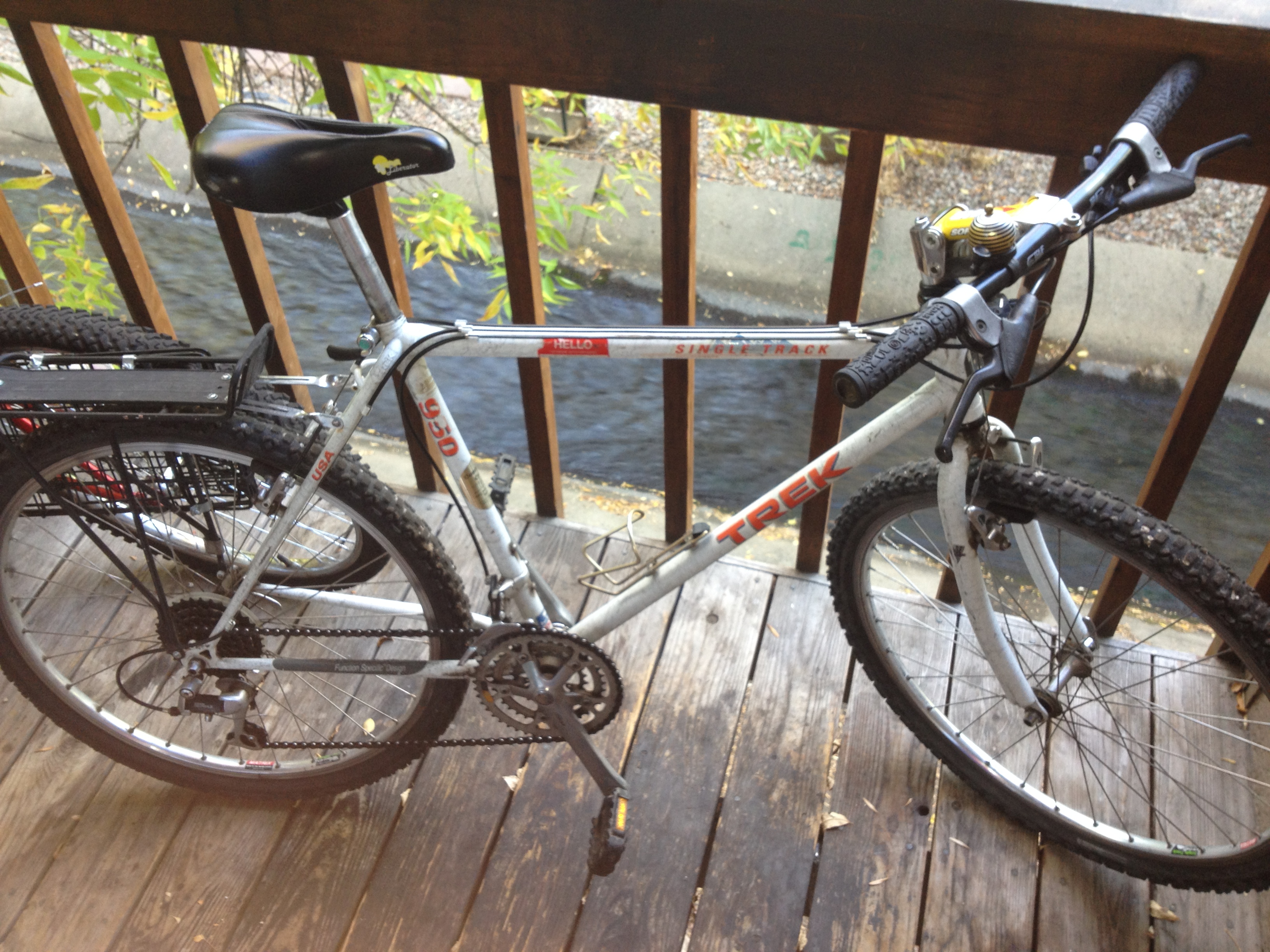
 
It has a 17″ frame, and some extra grooved tires for the snow. It has trigger gear shift capabilities that work relatively well and old but reliable brakes. It has a loud bell, a retractable steel grocery basket that fits onto the mountain rack on back, that I use as a makeshift splash guard. I have a decently comfortable seat that is locked to the frame with a wire lock. I keep my heavy duty u-lock attached to the frame and I use a large thick black bell dome helmet. I have all my reflectors in place, plus a flashing or steady rear led red light in addition to my steady or flashing led headlights.

 
Even with my ability and all these flashing lights, I almost always get hit day or night and it happens in the crosswalks! I come from an area where drivers have a tendency to lack patience and manners, but they are extremely efficient in terms of keeping traffic moving but also very aware of the stop signs, lines, lights and pedestrians.
Many of the drivers in Boulder are the opposite and it’s been tough to get used to it, but that’s not the issue. The issue comes with how bike friendly the actual city of Boulder is! There are crosswalks for pedestrians and bikers that have flashing lights and announce to slow down and stop, and there are bike lanes everywhere.
Bike are people too!
So every day I happen to be riding in the bike lane, or on the sidewalk if there aren’t any and someone almost hits me in that safe area! It’s because many of the drivers here happen to think that the stop line is for your back tire or the back of your car! Then they usually try to make some apologetic gesture, knowing that if they hit me, they would be in a big trouble, legally. So please, be considerate of pedestrians, be efficient but aware, and recognize the fact that your automobile is a powerful weapon if not handled properly.

Let’s keep our streets and sidewalks safe for everyone! Biking is a physically and mentally rewarding activity and although I may not like the snobby cyclists that wear racing gear and use $5,000 bikes to commute, I enjoy biking to work everyday. It is great for the environment, which I care much about, and it’s a decent leg workout if done correctly. Plus, it always wakes me up before I get to work on the early cold days. I love riding through the snow in the mornings here when the powder is untouched.

Oh well, enough of that, thanks for reading and remember to use green and alternative transportation!

spacer

11 Ways to Maintain or Lose Weight Throughout the Holidays

The holidays are never easy for those trying to maintain or lose weight. Never ever. You’re typically surrounded by family shoving food in your face like ham and cookies. We’ve created a guide that you should follow to weather this tumultuous season. Let’s stay on track!

  1. Exercise or MOVE 30 minutes a day. Minimum. That sounds like a lot. It’s not. Walk the dog, take a brisk walk round the neighborhood, scrub the floors, hop on the treadmill or elliptical. You can even pick up a light sport such as golfing, cycling or even hit the gym for a few weeks. It is worth it. 
  2. Limit yourself to 2-3 treats a week. This plays a big part in maintaining all of your progress. Don’t binge on treats all the time, it’s about moderation.
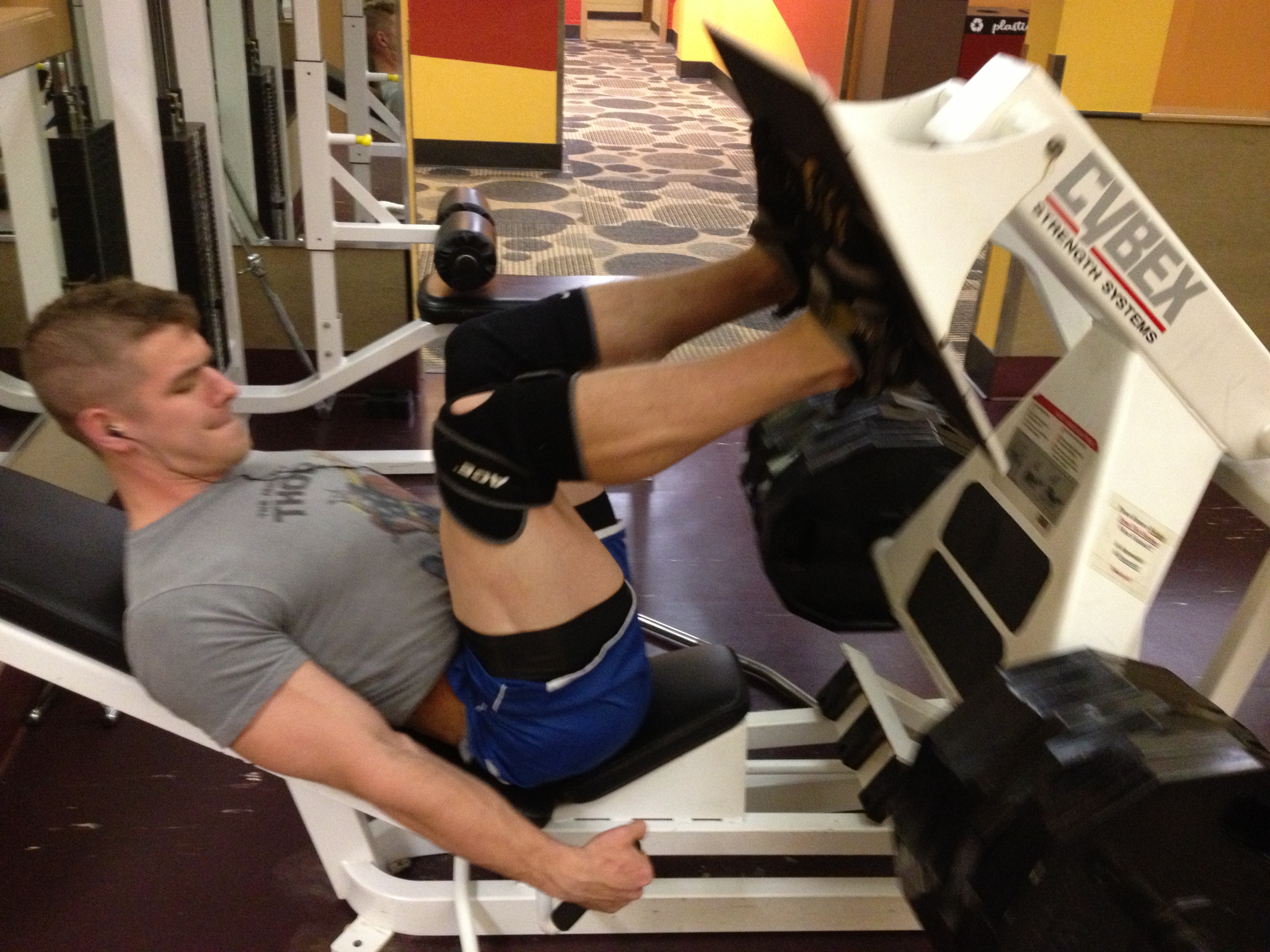
  3. Strength train 2-3 times a week. Whether that means getting on the floor and doing core work, picking up weights, or using machines in a gym facility, get your muscles working. Keep up the toning and strength work. We want to keep burning calories after our workout! Chris pumping some good weight
  4. Resist temptation most of the time. Say that pack of oreos or that ice cream sundae is looking fabulous. Try to resist as much as possible, but again, have a treat now and then. When you resist the cookies, supplement it with something else like banana and peanut butter, greek yogurt, crackers and peanut butter, or fruit. Still tasty, but tremendously better for maintaining your progress.
  5. Get your friends and family in on the exercise. Think of how funny a plank or push up contest would be with all the folks. Get people to go for walks or jogs with you. Do a 15-minute timed abs routine with your cousins or siblings. Create family time around something other than food–and make it fun. Think how hilarious it would be to see your dad playing Just Dance.  
  6. Look at ingredient labels. If it has anything like “high fructose corn syrup” on it, STAY AWAY.
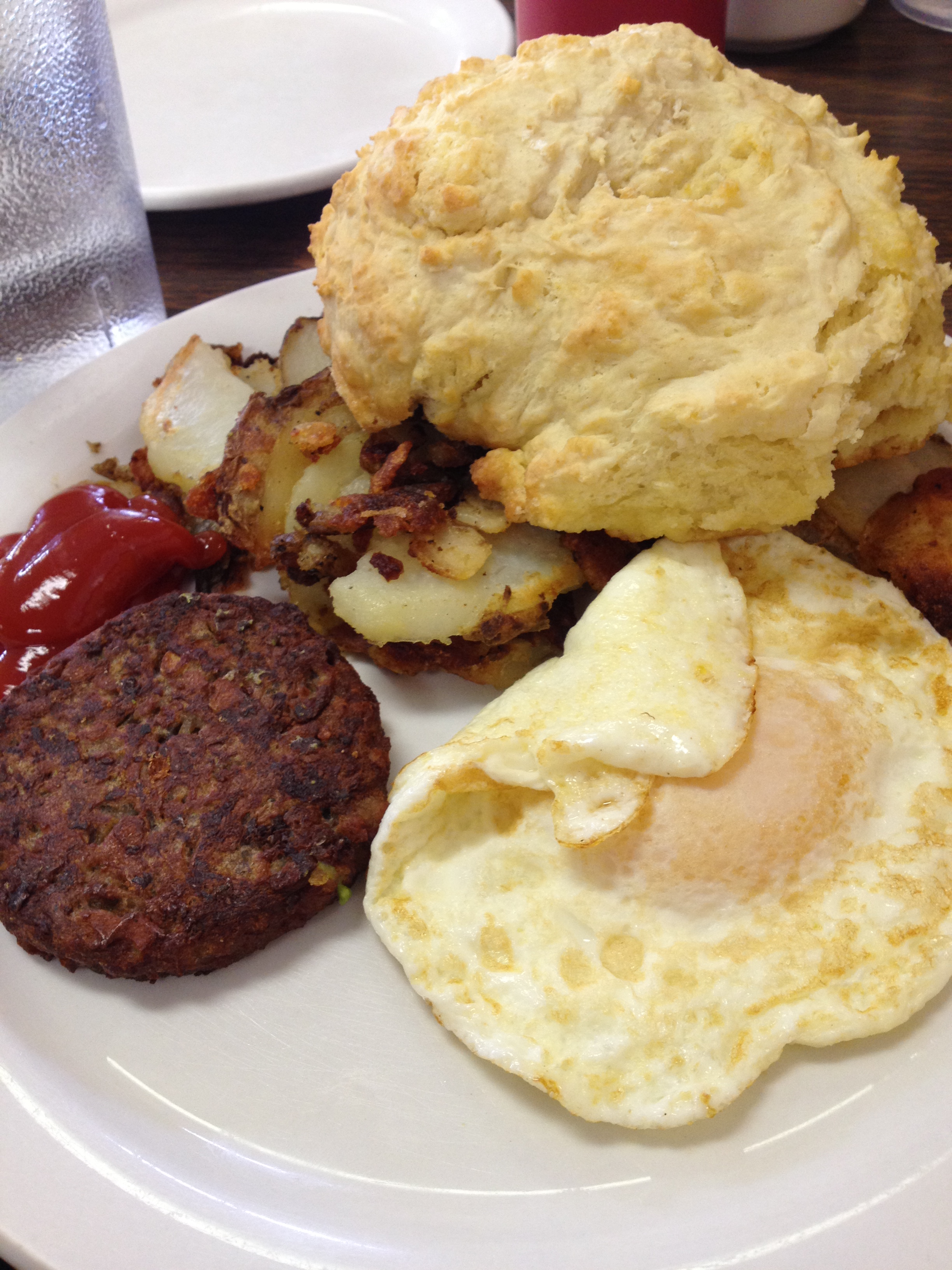
  7. Eat breakfast. A simple simple way to control your metabolism and eating for the entire rest of the day. Not very hungry? Just have some greek yogurt and nuts, eggs on whole wheat toast, or a smoothie. Just to get the metabolism started and preventing a binge-fest later. Alana's typical house breakfast
  8. Control your portion size.We eat with our eyes and then we feel bad if we leave food on our plate. Break that habit and get small servings to start. You can always get more if you’re still hungry, right? Be smart about these choices. Use a smaller plate or bowl. 
  9. Eat often and well. When our glucose levels drop, we usually scrounge for something to satiate it: cookies, chips, ice cream, etc. However, when we eat often throughout the day (every 2-3 hours), that doesn’t happen. Have carrots, fruit, and nuts around the house—easy fix.
  10. When you eat, just eat. Sounds weird, but if you eat while distracted, say, while watching television, you don’t pay attention to your food or how your body is responding to it. Take the time to eat and really enjoy the food. It’s a good meditation and you won’t overeat.
  11. Is it worth it? Look at that piece of unhealthy food. Is it worth it? Is the satisfaction going to last more than ten minutes? What about that feeling of progress with weight or lean muscle? Weigh your decisions (no pun intended). Then reward yourself with a smile and know you did the right thing. 

So there you have it. Not too difficult to follow because you do get some cheats and treats every once in a while. It’s all about moderation. Be realistic,  but don’t overdo it. Good cheer and good luck this holiday season!

spacer

Responsibility of Guardians Does Not Stop in the Gym

This is for you, parents, guardians, care-takers, and so forth. You’ve made it to the gym. Good job. You’ve brought a tag-along (no, not the cookies, a child) and feel satisfied that the gym is a good, safe place they can roam around and have fun. Wrong. Let me share with you a few ways kids unsupervised in gyms can go poorly:

1. They can injure themselves via weightlifting. We saw this yesterday. A kid, no more than twelve, somehow wearing weightlifting gloves (I don’t even wear them) doing curls. And he was lifting way too much weight. Which is when he compromises the proper form and uses his shoulders instead. It is so easy to injure your shoulders. Do your son or daughter a favor, and watch them if they are lifting, don’t let them build horrific injury-leading motions that can hurt them in the future. We were wary of the guardian nearby, because sometimes poor form comes from them.

2. They can distract, injure, or anger someone else. This may seem odd, but sometimes meat heads hit the gym. And they often come with a temper and seriousness to accompany their workouts. As if those workouts are the most important event occurring at the time. Obviously wrong, but many do exist. Say your kid is running around, hopping over weights and bumping into equipment. Besides messing up a roider’s reps, who could release some serious anger at your kid and, ultimately–you, but he/she could also injure someone. Say somebody is far down in their squat and the youngster bumps into them. Wham goes their knees. And wham goes your pocketbook when they sue you.

3. They can injure themselves simply moving around the gym. The gym is not a safe area. It is for people to increase their fitness, which includes heavy machinery, weights, long bars, and lots of pointy edges. Can you imagine how easy it would be for them to trip and fall face-first on an 80-pound dumbbell? Not a pretty sight.

Gym media center

Gym

Those are a few reasons off the top of my head. I’m not saying don’t bring your kid to the gym, I’m saying watch your kids if they’re performing exercises or doing some type of exercise. It’s great for them to be active and healthy. Just keep them close to you and under your eye. Put them in child-watch, most gyms have them nowadays. You don’t want to risk their injury or someone else’s. You don’t want to risk getting booted out of your favorite gym. Just a heads up as safety is always most important to us.

spacer

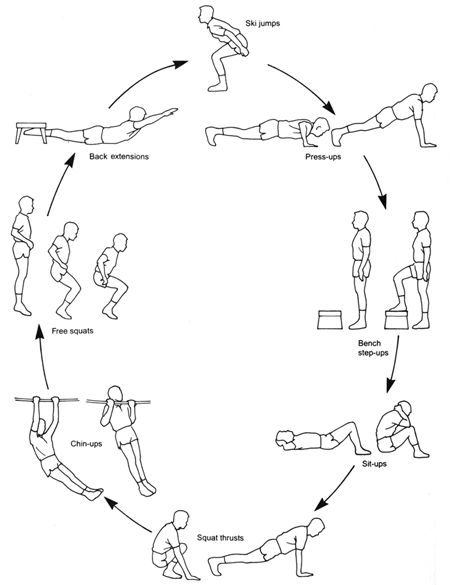
Circuit Training and Why You Should Try It

Ever feel like your workout is stale? Don’t look forward to it because you’ve done it numerous times before? You might’ve even reached a plateau and haven’t been able to achieve new progress lately. Don’t sweat it (lol, get it), it happens to all of us if we don’t change our workouts up. For example, we always switch up the muscle groups and add new exercises. But say you just do total-body workouts, which a lot of people do, and you’re just getting bored and losing interest. I have a solution! 
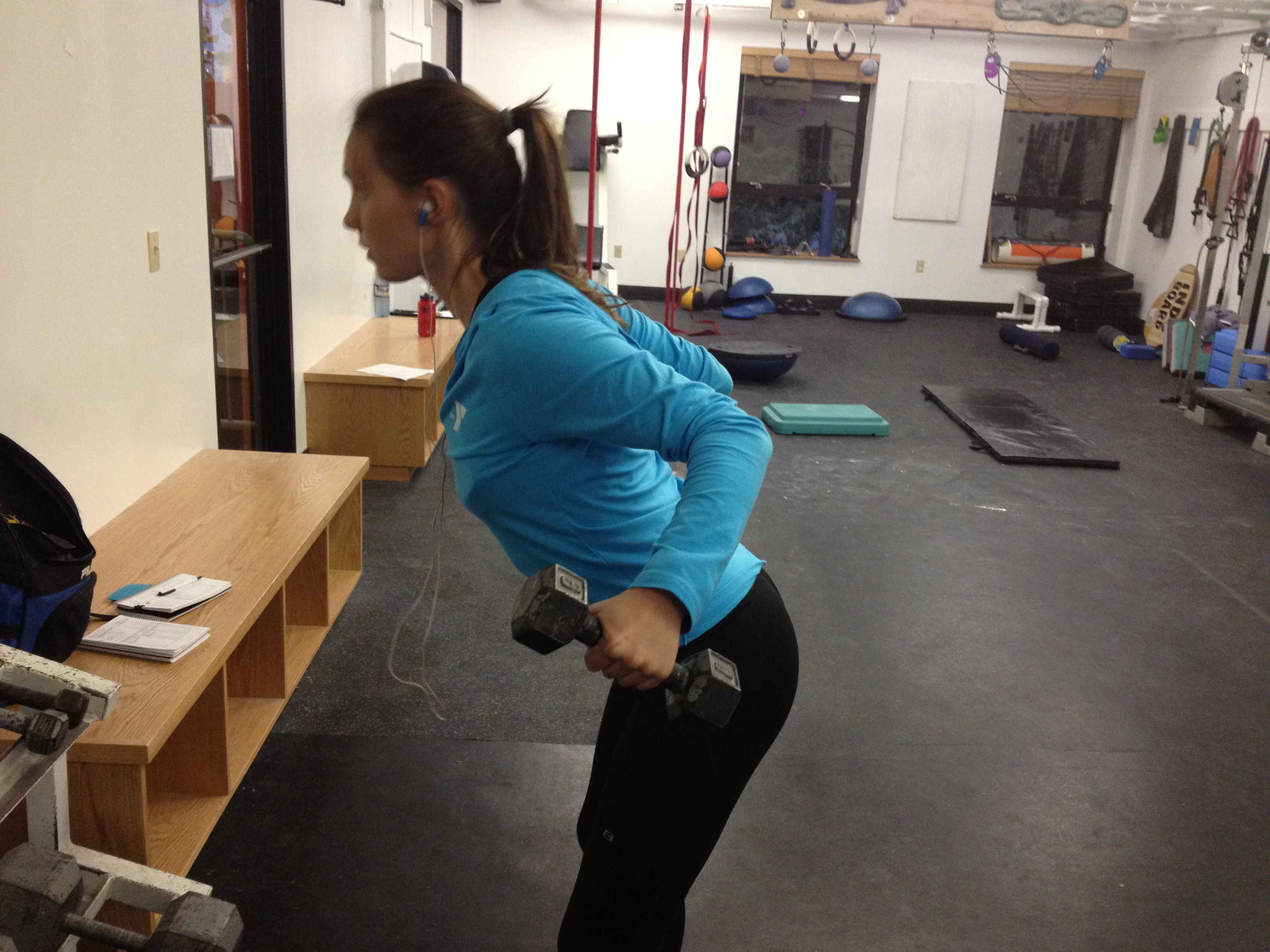
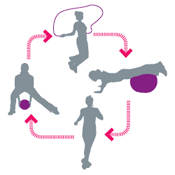
It’s called circuit training. No, you don’t need to be an athlete, a fitness extraordinaire  or even in shape! This will be the pathway to getting there and having some fun while doing so. Circuit training involves numerous stations with little rest time in between. This especially great for people who want to lose or maintain weight because you’re constantly keeping your heart rate up and your body moving. You give yourself a certain amount of time or reps at each station and then move to the next without resting. There are various ways to do this, and you can even do it at home. 
Let me give you an example. 8 Stations:

  1. Push ups 
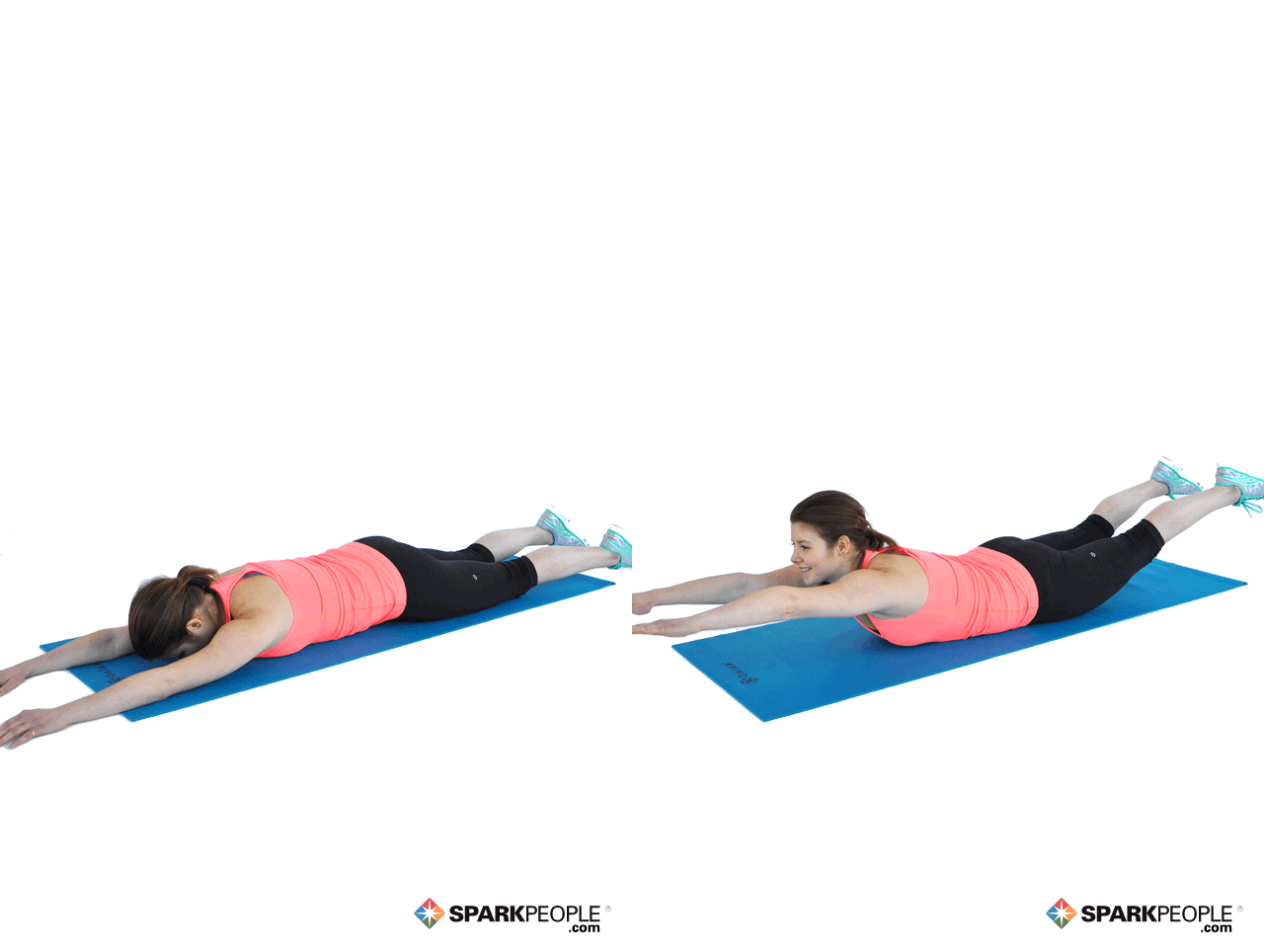
  2. Supermans 
  3. Dumbbell swings 
  4. Mountain climbers 
  5. Plank 
  6. Curl, shoulder press, triceps extension (one sequenced movement) 
  7. High knees (in place) 
  8. Squat jumps 

You would go through say, 45 seconds of each station and move to the next. It depends on your fitness level. With some of my more beginner clients, I will give them 15 seconds rest between every two stations rather than until the end. I will give you variations at the end. Want to workout at home and don’t have any equipment? No problem.

  1. Squat jumps
  2. Push ups
  3. Reverse crunches 
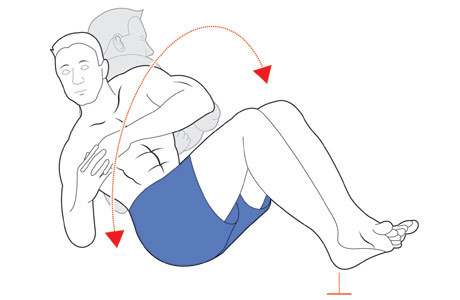
  4. Russian twists 
  5. Jumping jacks
  6. Lunges
  7. Calf raises 
  8. Jog on the spot 

Don’t need any equipment for that one. And you can design the circuit training to fit your needs. Looking for only cardio? Swap the strength exercises (like push ups) for things like jumping jacks, jump rope, high knees, mountain climbers, jog in place, and so forth. Want to focus more on strength? Take out the cardio and add more strength in. Either way, you’re getting your cardio up by going from station to station without rest. Personally, I would suggest keeping both in the routine. Strength and cardio training is important for everyone, I don’t care who you are.

List of more exercises you can do (with and without equipment):

  • Crunches
  • Dips
  • Squat press
  • Plie squats
  • Wall sits
  • Triangle push ups
  • Step ups
  • Shadow boxing
  • Medicine ball throw
  • Chest press
  • Pec flies
  • Skull crushers
  • Jump lunges
  • Hip bridges
  • Burpees
  • Curls

And so on and so forth. There are tons of exercises you can do. You can make your own routine. Pull some of your favorite exercises from the list and go for it. Try to hit all parts of your body.

Beginner: 8 stations, 45 seconds at each station, 15 seconds of rest after each two stations, two minutes rest at the end, complete three circuits.

Intermediate: 10 stations, 1 minute at each station, 15 seconds of rest after 5 stations, two minute rest at the end, complete three circuits.

Advanced: 12 stations, 2 minutes at each station, no rest in between, two minute rest at the end, complete three to five circuits.

Please, try circuit training. At your gym, at your home, outside, wherever! Some advantages of circuit training? I already covered some but I’ll recap: saves on time, encourages fat loss, keeps your heart rate up, effective use of time and exercise, works on all muscles of your body, improves your cardio, and improves strength. Those are just a few. You choose the number of stations, length of time at each station, and how many circuits you have time to do. Challenge yourself every time.

Let me know what circuit you did and how it went! And if you have any questions, please leave a comment below.

spacer

Swim to Workout, Swim to Live

Pressured by Alana to write a post because our consistency has been awful lately (we are very busy, but no real excuses exist, I have enough time a day to write ONE post), I am going through the most difficult process.. deciding what to write about. I can write about anything, or try to… I mean it might not be good but I can go on and on if I want to. So I’ll save the favorite video games of the past year post for when I’ve played a few more I want to finish, my dinner tonight was disgusting so forget that (over 1600 frozen calories), I took the past two days completely off workouts and three from climbing because of forearms splints and just being sick.

I need rest to recover quickly (I hope), so let’s talk about something obvious for me… swimming. This isn’t going to be in detail, I’m just going to talk a bit about swimming. Of the over fifty hours a week that I work, or will be working, almost all of it is related to swimming or aquatics. So let’s break it into a few categories… continue if interested:

Swim training 14

Swim training

Water Safety: This is the most important of all aspects of aquatics. Whether you’re at a birthday party playing pool games, swimming laps to stay in shape, working on your strokes to qualify for an event, surfing in Southern California, snorkeling in the keys, or scuba diving in Southeast Asia, you always need to consider safety and it starts at a very basic level.

Learning to be comfortable and not scared of the water is the first step before you can become proficient at any aquatic skill. If you’re scared of drowning at a very forward level (everyone should be aware of it) then you need to get over that fear quickly. Having children get comfortable with the water at a young age will allow them to break into learning how to actually swim easier, so it’s never too early to start. But it’s also never too late to start! Better early than late but better late than never. If you aren’t comfortable or children that are dear to you aren’t either, then you need to find someone to work on that.

English: A breaststroke swimmer, in a hotel sw...

Just keep swimming!


Swimming: Swimming is a great way of moving efficiently, doesn’t always have to be quickly, once you’ve got your water safety and comfort taken care of. The key here is to conserve energy and have a means of moving that utilizes your arms, legs, and ability to breathe. That’s right, obviously, breathing is the most important aspect of swimming. I don’t care how fast you can swim with your face in the water if you can’t breathe. Swimming is about survival when it comes down to the nitty gritty. Whether it’s rolling onto your back to float or using a rollover breathe to replenish air before going back into a faster means of moving, breathing it key. Once you have those motor skills involving your arms, legs, and breathing operational, it’s time to think of the next step.

Swimming to workout: Now at the highest level this would include competitive swimming, but the basic level means that you can kick, stroke, and breathe properly so that you can workout without hurting yourself. If your stroke is off, you might hurt your shoulders or something else. If you breathe to one side you might develop a huge knot over there, or you might just develop an uneven stroke. If you don’t kick, you won’t swim as well or you could pull a groin or a muscle in your leg. If you don’t breathe, your workout won’t last long. Even if you’re not competitive think about taking stroke classes so that you can get a better workout by doing breast stroke, back stroke, flip turns, butterfly and other advanced techniques that will activate muscles you’ve never used. You can expand your lung capacity, burn fat, and even more. (Note: Please get proper instruction in how to do butterfly, it’s far too easy to hurt yourself if done improperly.)

Competitive: If you have all your strokes and techniques down, and you’re in good shape or want to be, join a team or a program to keep swimming. United States Masters Swimming will take anyone not affiliated with some other organizations if you are over 18. It’s a great chance to keep or start competing. United States Swimming is another huge program to look into especially for youth, and there are local clubs for people of all ages if you are in the right spot and look hard enough. Otherwise, join a class and compete against yourself in a strict environment. YMCAs usually offer lots of programs.

PB220013

Competition

Recovery: If you are injured or your body has become more fragile there are tons of water therapy and recovery, and fitness, classes that are much easier on your joints. AEA and Waterart offer some certifications in teaching these courses if you are interested. You are never really too old to stop getting in the water.

Extreme: If you want to surf, go for it, I recently did and feel comfortable although we just moved after Alana got a new board. Snorkeling is a great tourist activity and scuba diving is the ultimate underwater adventure. Scuba stands for self-contained underwater breathing apparatus and it, and the aqualung, were in great part the result of the efforts of the late Jacques Cousteau. I recently had the pleasure of meeting and having lunch with his son, Jean-Michel. You can either go to SSI or PADI to get certified and they last for life and offer endless specialization continuing education opportunities. I am currently enrolled in SSI’s Open Water Diver course, and I plan on completing that and my Advanced OWD by the end of the year. Then it’s onto Rescue Diver and Dive Master but we’ll see how long that takes.
Scuba diver. Found at Plongée sous-marine & ob...

Scuba-ing

If you have any questions about anything aquatics, even ocean conservation, please feel free to leave a comment. I’ll get into more detail about each of these over the next few weeks, possibly expanding by giving each its own post, including ocean conservation and preservation, and everything else.
Enhanced by Zemanta
spacer

Back to Back… and Biceps… Yet Again

It’s another cover of one of our workouts, which have been getting a little bit better… I hope. It’s been very challenging balancing working 7 days a week and still finding time, with gyms not being open 24 hours, to work out and work out well. Furthermore, it’s been most challenging to not neglect any body parts. Ideally for me, aside from cardio workouts and recreational workouts, I like to focus muscular isolation workouts on legs, core, chest, triceps, biceps, back, forearms, and neck. Combinations can be made freely, but again, ideally once a week with proper rest is a good start… twice a week when we’re in killer shape. Never more than that, especially with strength training.  We’ve been struggling with hitting every body part on a good reliable consistent rotation but back and biceps are rarely missed because of their size, and for now, their role in climbing. So here is my coverage of a decent pull muscle workout.

We hit the gym around 9:30, a little late, we like to get there around 9, and I put some Tiger Balm and Tiger Balm Muscle Rub on my upper body pull muscles and joints. Prior to coming, on an empty stomach, I took 1.M.R. A pre-workout supplement, one scoop a day before my muscle workouts, for nothing else. At 9:37 the fun began, on a day where I was feeling pretty good, a little sore throughout the body, especially in the lower back, and my cold I have now hadn’t hit me yet.

(by the way, as a foreword, before you ask about rest or reps, it’s minimal rest and every set is to failure, seriously)

9:37: Super set 1: (4 super sets)

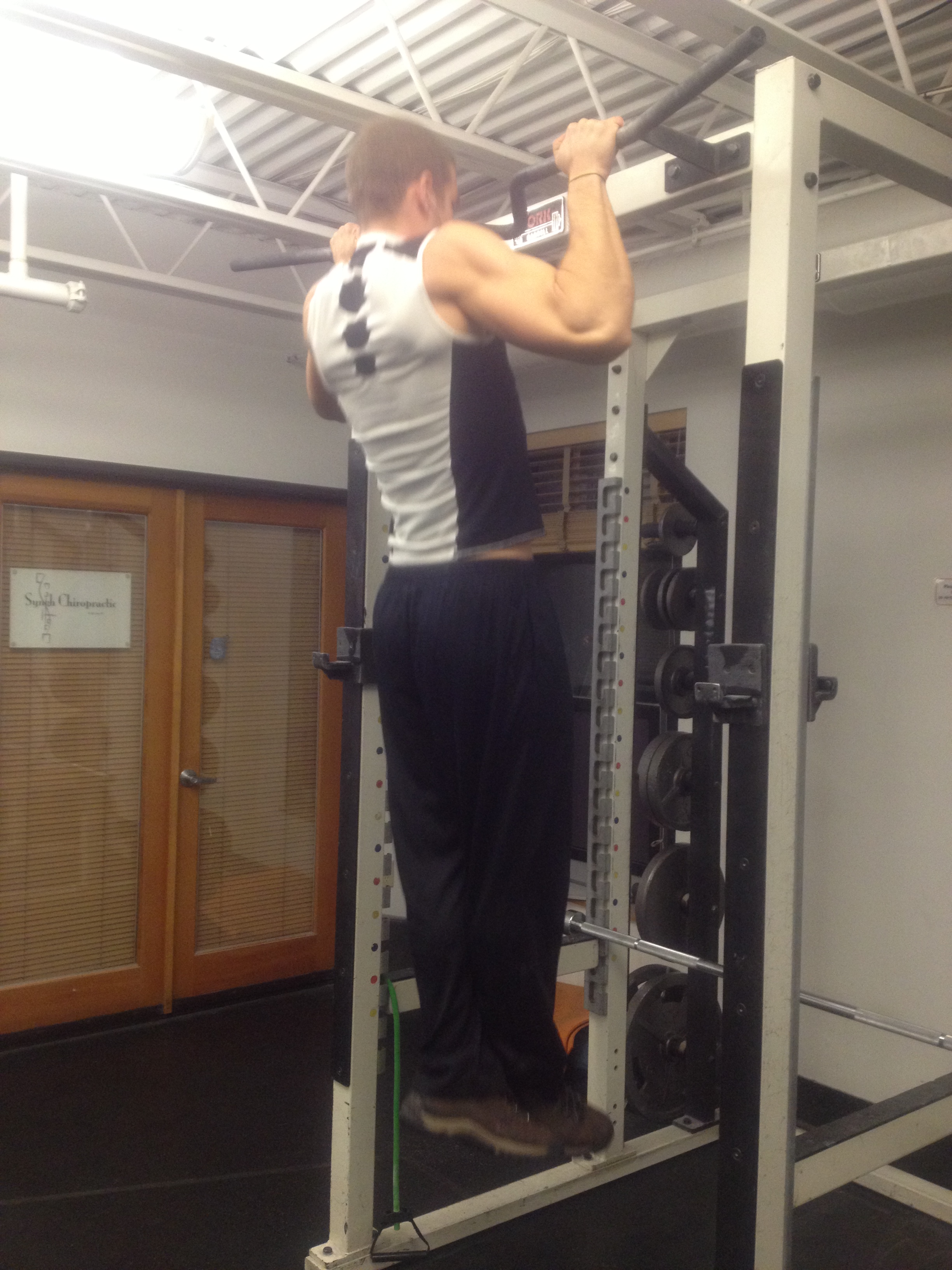
a. Alternating pullups and chinups

b. Seated d-bell lat flyes (it’s the proper spelling, seriously, but I don’t care how people spell it, Alana did standing)

9:47: 2 (4 super sets)

a. lat pull downs (narrowing grip every set)

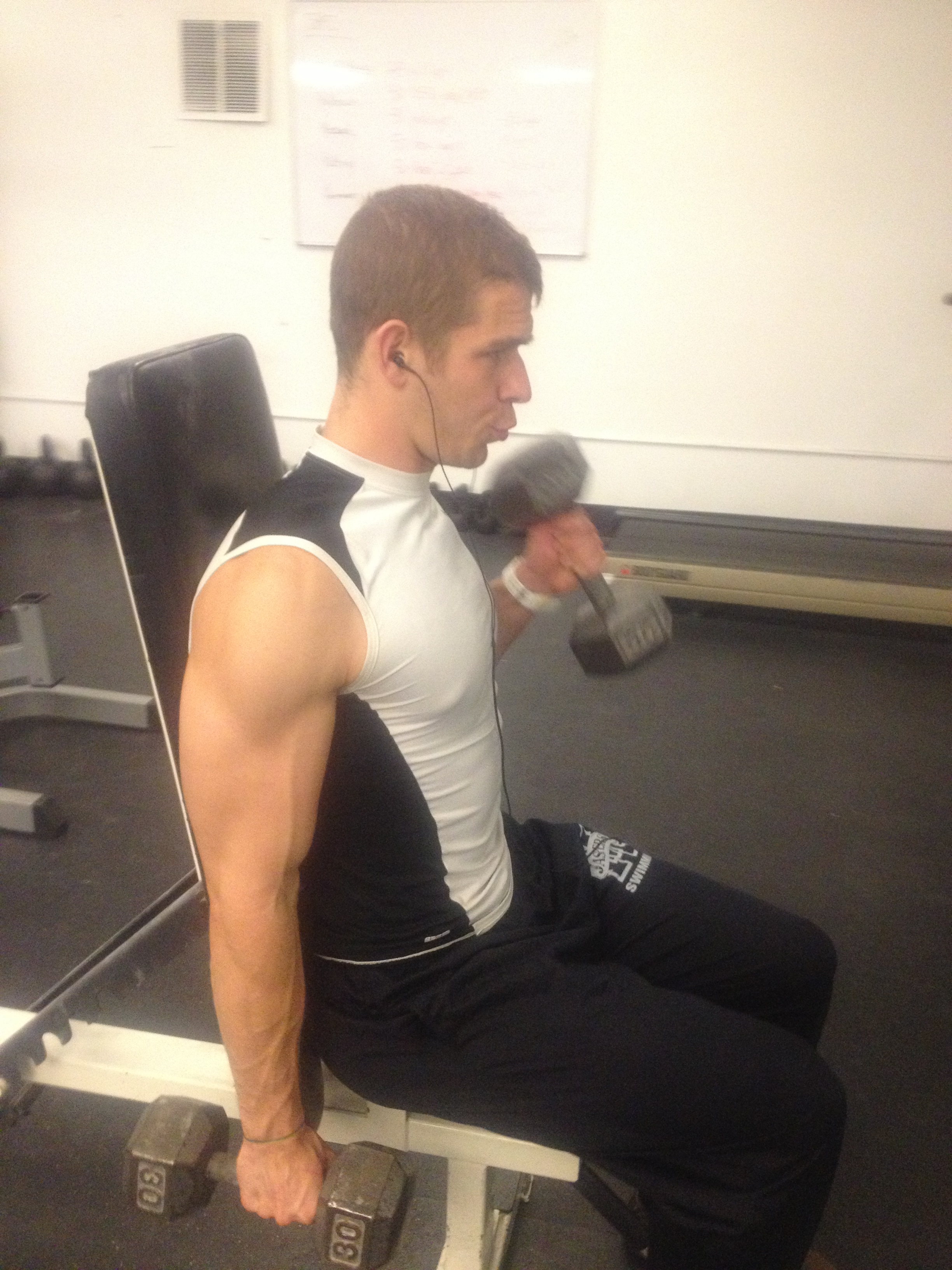
b. seated hammer curls

(during this set, while we were swapping equipment because two pieces for two people is more than fair, some gym jerk decided to try to take our incline bench, so I told him to beat it and he did. I was polite)

10:01: 3 (4 super sets)

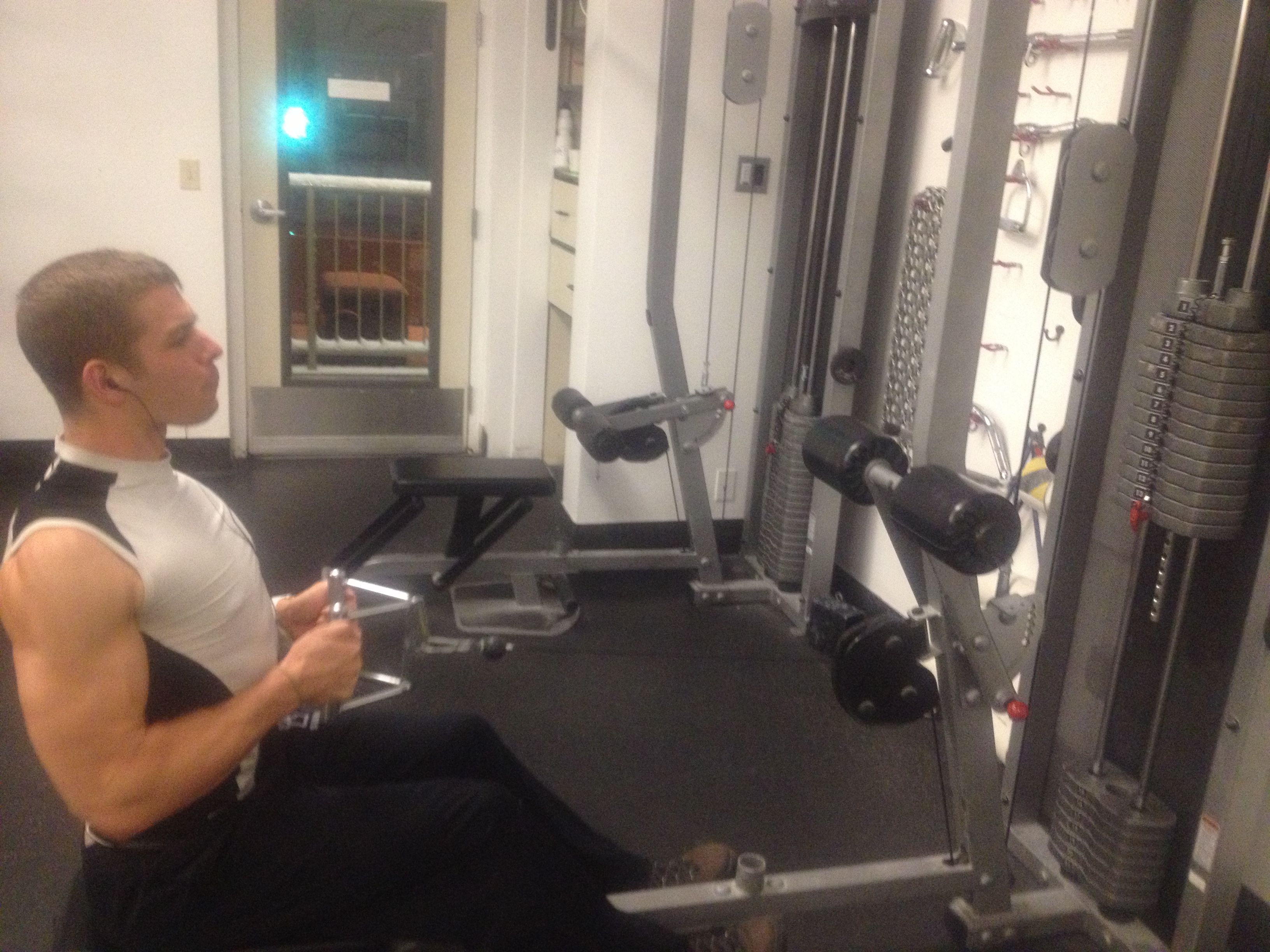
a. low seated cable rows

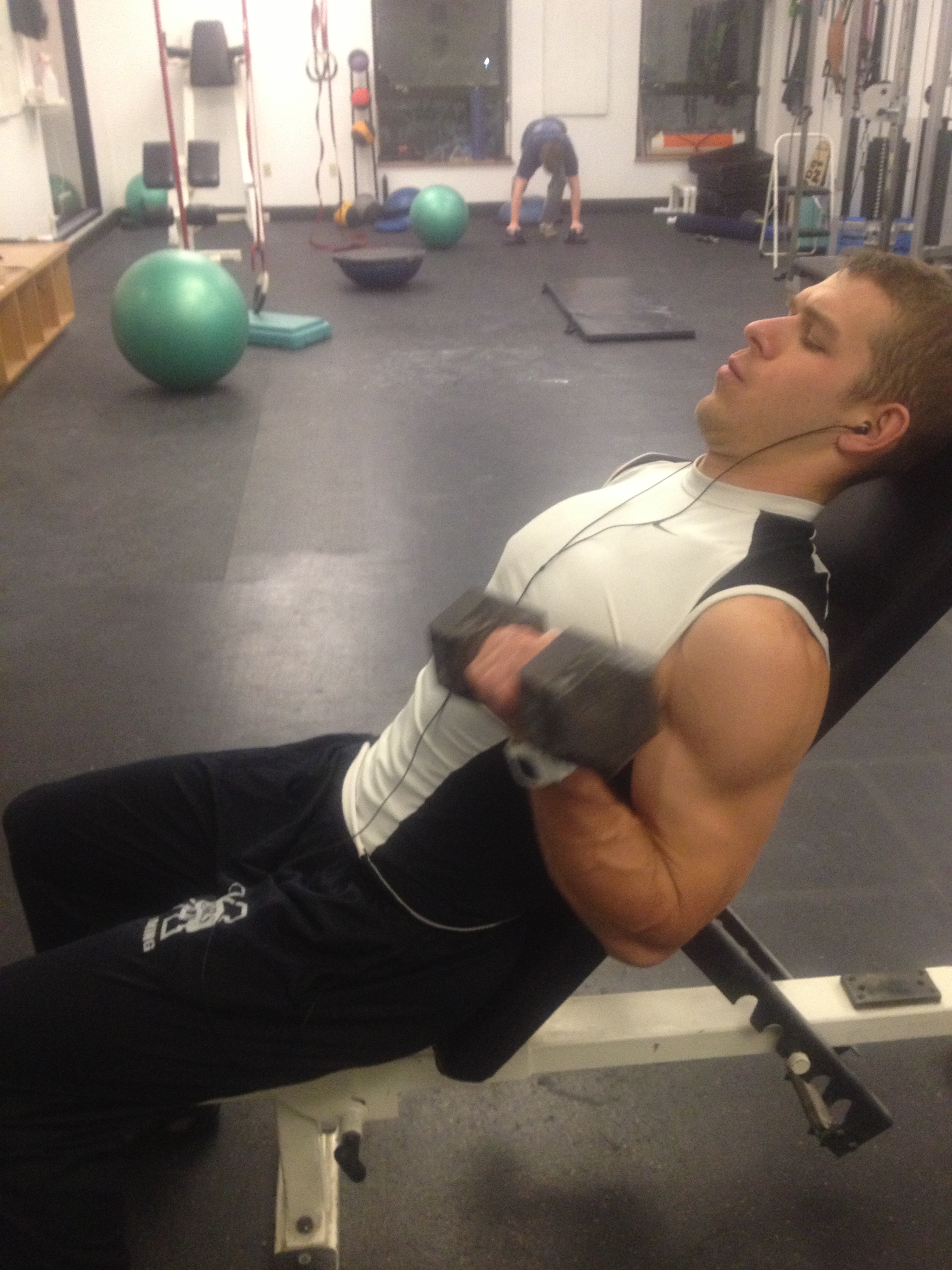
b. incline pinky offset curls (have your pinky be touching the head of the d-bell, so the thumb is around the middle)

10:17: 4 (3 super sets)

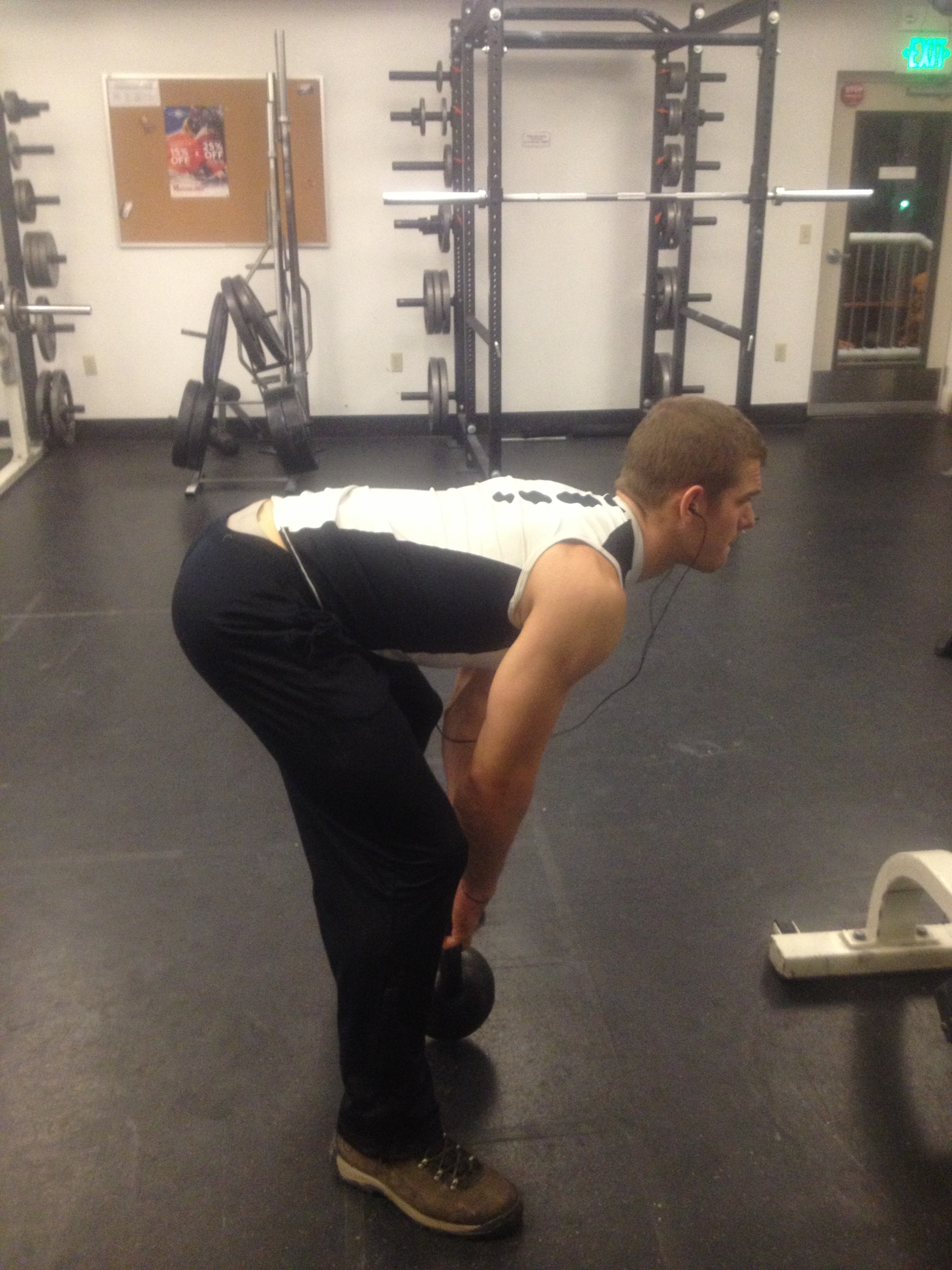
a. kettle bell sumo romanian deadifts

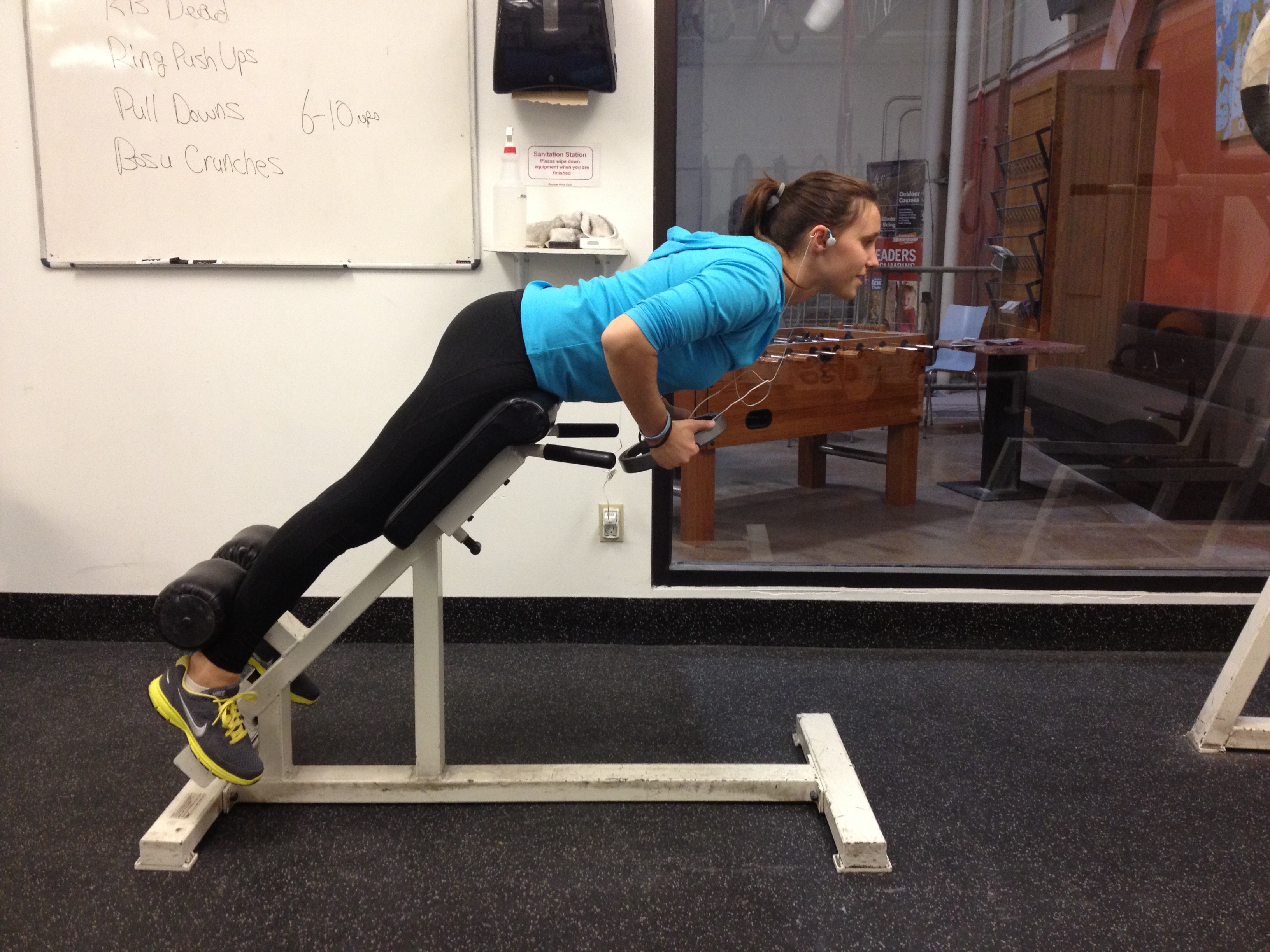
b. back extensions

And then around 10:30, we bouldered for about 20 minutes until my forearms felt like they were about to split. Typically, we get kicked out of the gym, but that day we left a couple minutes early. If you ever get that sensation, just stop.

So now, the reason why I wrote this post was to dedicate a section to bodyweight or near bodyweight lower back exercises. While sometimes I work out lower back with back or legs, it really could be classified as core. Depending what your weekly split is, you can cater your lower back workouts to match those days. For instance,

If you are trying to do lower back with legs, deadlifts and squats are great exercises to focus on good form and strengthening your lower back. Whether it is a romanian dead lift, straight leg, front squat, olympic squat, etc you should focus on good form! If you squat 600 lbs for 1 rep and your back isn’t straight, I don’t count it. You can, but you’re lying to yourself.

You can also use the back extension apparatus that is actually a glute/upper hamstring piece of equipment. Hit a few birds with one stone. If you’re doing shoulders or back, kettlebell swings are a great workout for lower back. But if you’re trying to work body weight, lower back is a great group to focus on with your core.

Back extensions on the apparatus are I think the most convenient one here. It is bodyweight and weight can be added, but it requires a piece of equipment, and if you don’t have it just do…

Supermans – laying stomach down, extend your limbs outwards and slowly or quickly contract upwards, then slowly or SLOWLY stretch back downwards to the floor. Thirty reps is a great goal for body weight exercises, especially for your core.

Any deadlift can be done bodyweight. Single leg are the most challenging and if done improperly can hurt your lower back a lot more. I recommend a straight leg romanian deadlift where your only pivot point is at the lower back. Rep it out again with the same execution as the superman.

Never, in any circumstance, bend your lower back or arch it towards your stomach. Try to keep it tight, keep it straight and if anything, but try not to, arch it away from your stomach.

Do a plank, and a side plank on each side. Planks are arguably if done correctly the best core exercises and this includes your lower back. Do not overlook these. Do them for as long as you can maintain proper form, and when form deteriorates, rotate onto your side… or rest! Then repeat.

If you have a stability ball, you can do reverse extensions where you bring the ball into your chest with your feet on it. Keep that spine straight and try to rep it out. I usually shoot for 20.

Don’t forget about bridges. These will be used in some yoga classes. It’s kind of a reverse plank, with your back to the ground.

And on that note, consider yoga poses! Cat pose, cow pose, cobra, scorpion, chattarangaaaaa (or however you spell it). These are difficult glorified stretches that can really work. Just make sure you don’t only do these. I have a thing against just doing “static stretches” but I understand yogis that these aren’t JUST static stretches so stay back.

Any questions?

spacer

Work Those Push Muscles: Chest and Triceps Workout

So there are some workout match-ups that tend to be our favorites. One of those favorites is the sweet chest and triceps pair. It’s a great combination and leaves you exhausted afterwards (my arms are very upset with me now that I am typing). So Alana, you’re probably saying, why is it a good combination? Lemme spit some reasons at ya (not literally, come on).

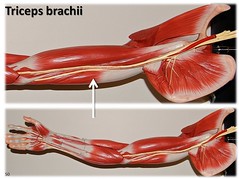
Triceps brachii, large arm model - Muscles of ...

Triceps brachii

1. Convenience: being able to do your chest and triceps at once can really open your workout schedule. This is especially for the people who tend to try to workout every day or every other day. It gives you a few days to work on other muscle groups without worrying about overworking those muscles. Because ultimately, that will lead to injury. And that’s a no-no.

2. Effective: you’re going to get a much better chest and triceps workout if you work them together. If you’re doing it properly, every chest exercise you do will work your triceps a bit and every triceps exercise will work your chest. That’s just how our body works.

3. Power: it makes you feel huge. Think about the strength, effort, and power that goes into benching.

Anyhow, there’s a few reasons for you. Now let’s get to our actual workout. We have a few pictures for you of yours truly.

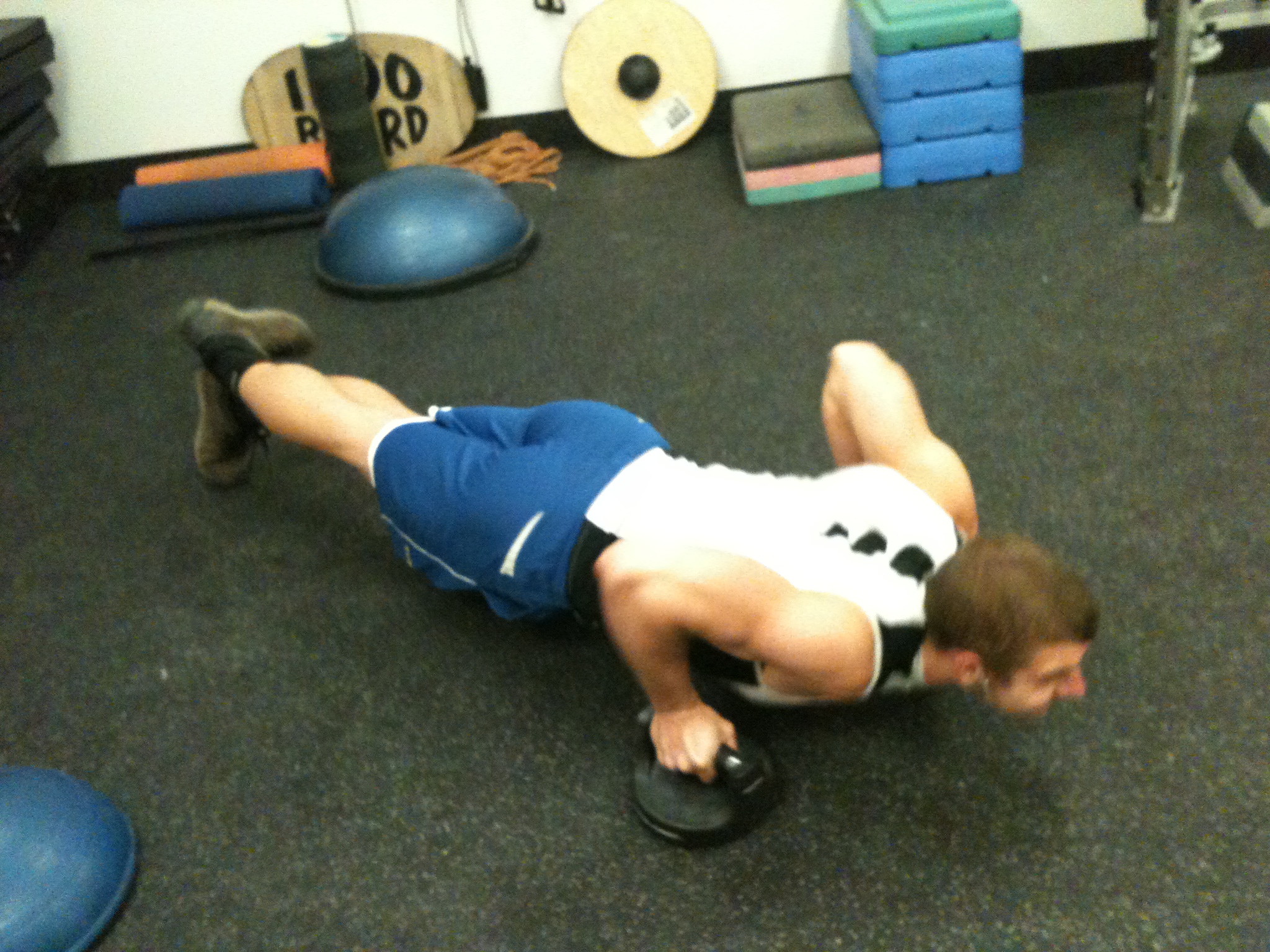
1. We started out with a super-set (one exercise after the other, no rest) of push-ups and triangle push-ups, working our chest in the first and triceps in the latter. You don’t need any equipment for this, so no excuses! Go until failure.

2. Our next super-set was incline chest press and incline pec fly. This really requires good strength and power (especially chest press). Unforunately, no pictures of us doing this. For chest press, you sit on the inclined bench, and push your arms straight up.

For pec fly, get in the same seated position. But start your arms out, like you’re going to give a tree a hug, and bring inwards (you tree-hugger!).

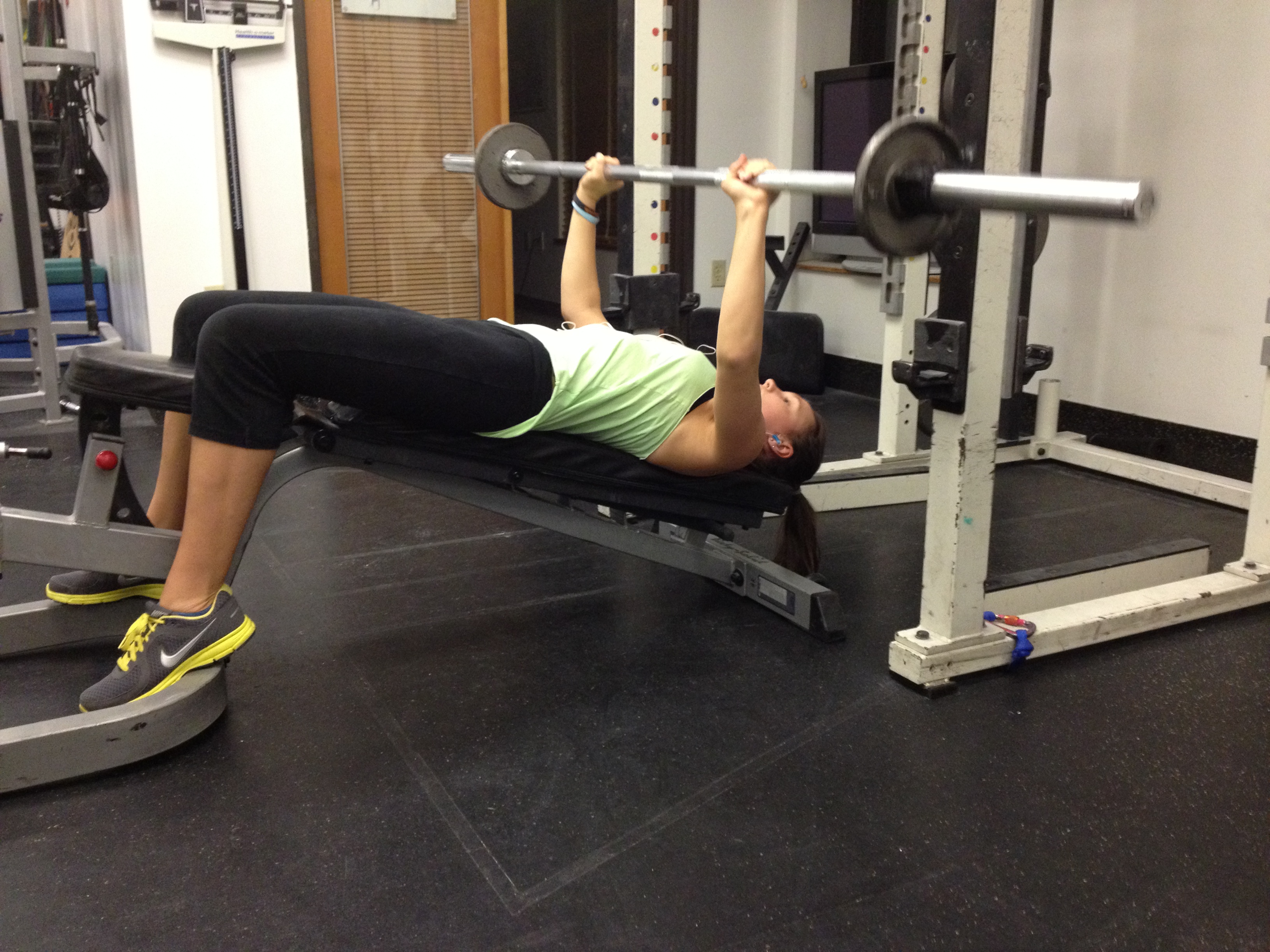
3. For this we didn’t do a super-set, because we wanted to spot each other for bench press. Personally, I’ve lost a lot of my strength, and can’t bench nearly what I used to (you’ll see low weight in the picture, the bar = 45 lbs). It’s just good to be there and spot for each other to get the weight up and getting help getting it down. We did decline bench press. Go for a good weight and, as usual, go til failure.

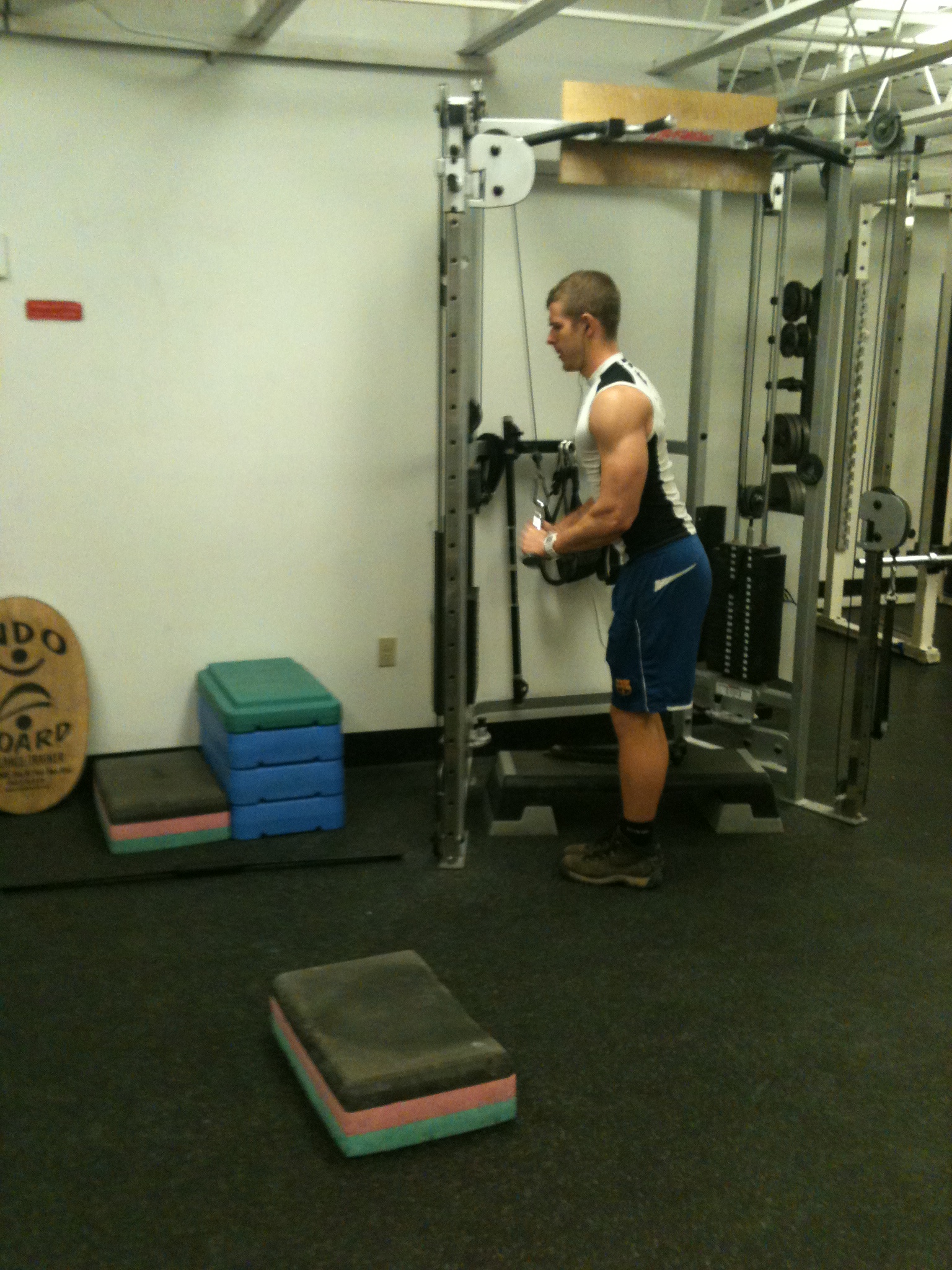
4. For our last super-set we combined triceps cable press and double-hand triceps extension. This really killed our triceps (in a good way!). For anyone uncomfortable with triceps exercises, I find that the cable press is an easy pathway to get comfy with working those triceps. You position yourself with the feet shoulder-width apart, facing the cable, and press down the steel triangle or horse rope down and bring your arms back to 90 degrees.

For triceps extension, grab a good weight and place behind your head and do vertical raises.

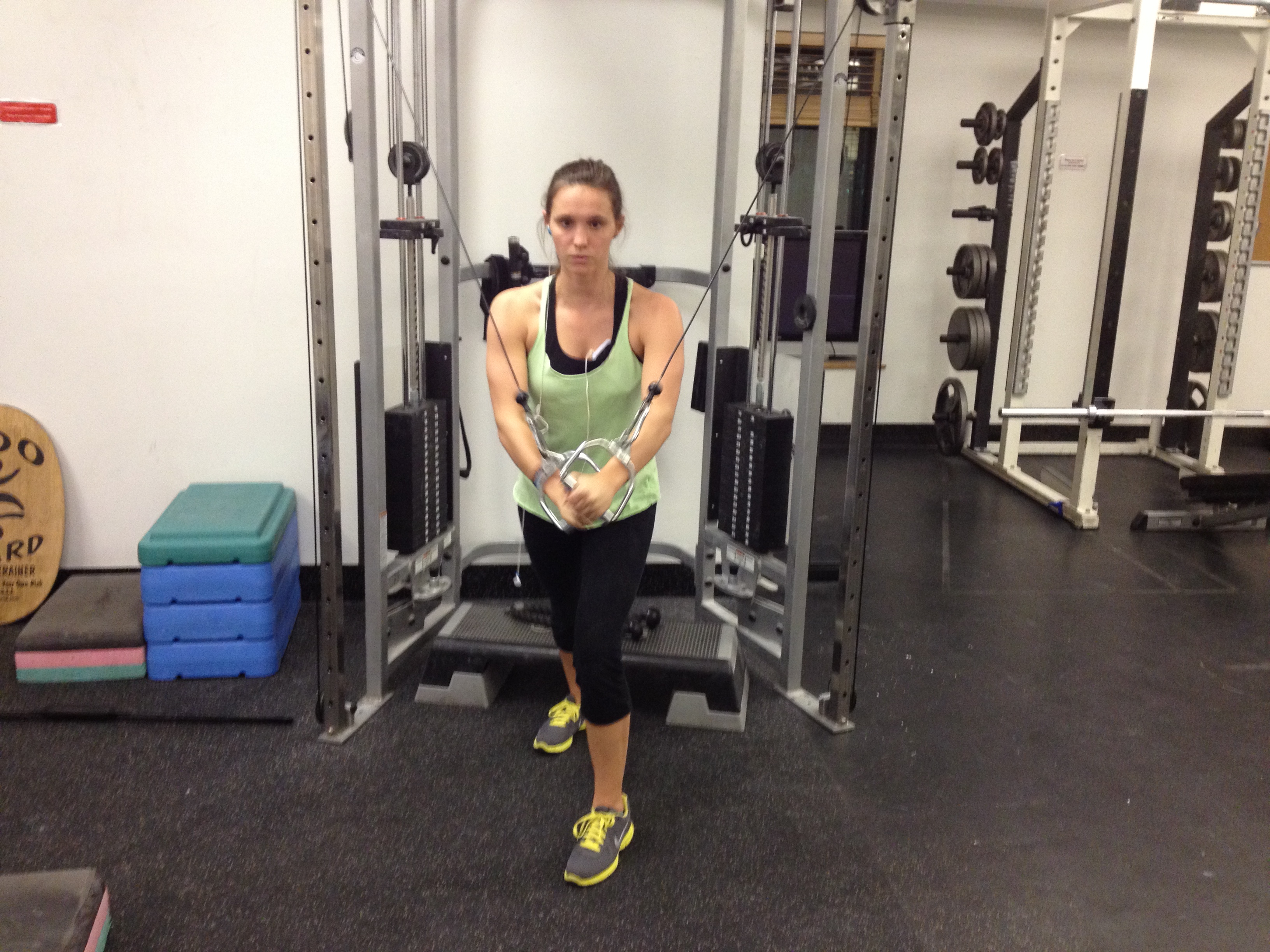
5. And lastly, to end our muscle workout, we did a cable cross-press. This will get a good pinching burn in your chest and triceps. We juiced out the rest of our strength through these. Always go to the end of your workout. Never stop pushing. Unless you feel sharp pains, THEN STOP. Stand away from the cables, grab each cable in each hand and cross over your hands.

For this entire workout, we did four sets of everything and pushed to failure. It could range from 8 to 100, it’s up to your body and your strength. We ended it with some excellent twenty-minute bouldering where Chris finished a new route that had been challenging him for weeks!

Please let us know if you have any questions! Cheers!

spacer

The Most Important Meal of the Day: EAT IT!

There’s a problem in this culture. For as much as we over-eat, so many of us do not eat breakfast. What’s the deal with that?! Meals are always something to look forward to in my day. Maybe because I have a slight obsession with food. Whatever. I’m here to tell you to EAT YOUR BREAKFAST! Just eat something: oatmeal, pancakes, yogurt, trail mix, bagels, fruit, something.

Why?

Well, boys and girls, let me talk a little about metabolism. You want a good, high metabolism. Why? Because the higher your metabolism, the faster your food is digested and nutrients absorbed. It means your body works faster and better. You see a lot of people with high metabolisms are usually thin, even though they seem to eat a normal (or more) amount. It’s either genetics or they know how and when to eat.

Structure of adenosine triphosphate, a central...

Structure of adenosine triphosphate, a central intermediate in energy metabolism (Photo credit: Wikipedia)

If you don’t eat breakfast, (just literally breaking your fast) your metabolism won’t wake up. For it to boot up and start trying to make you have less fat, you need to give it something to start on. Otherwise it’s going to be very slow. And when you do finally eat lunch (which is usually bigger than breakfast), your metabolism will be slowed down at that point and you won’t absorb nutrients or digest as quickly.

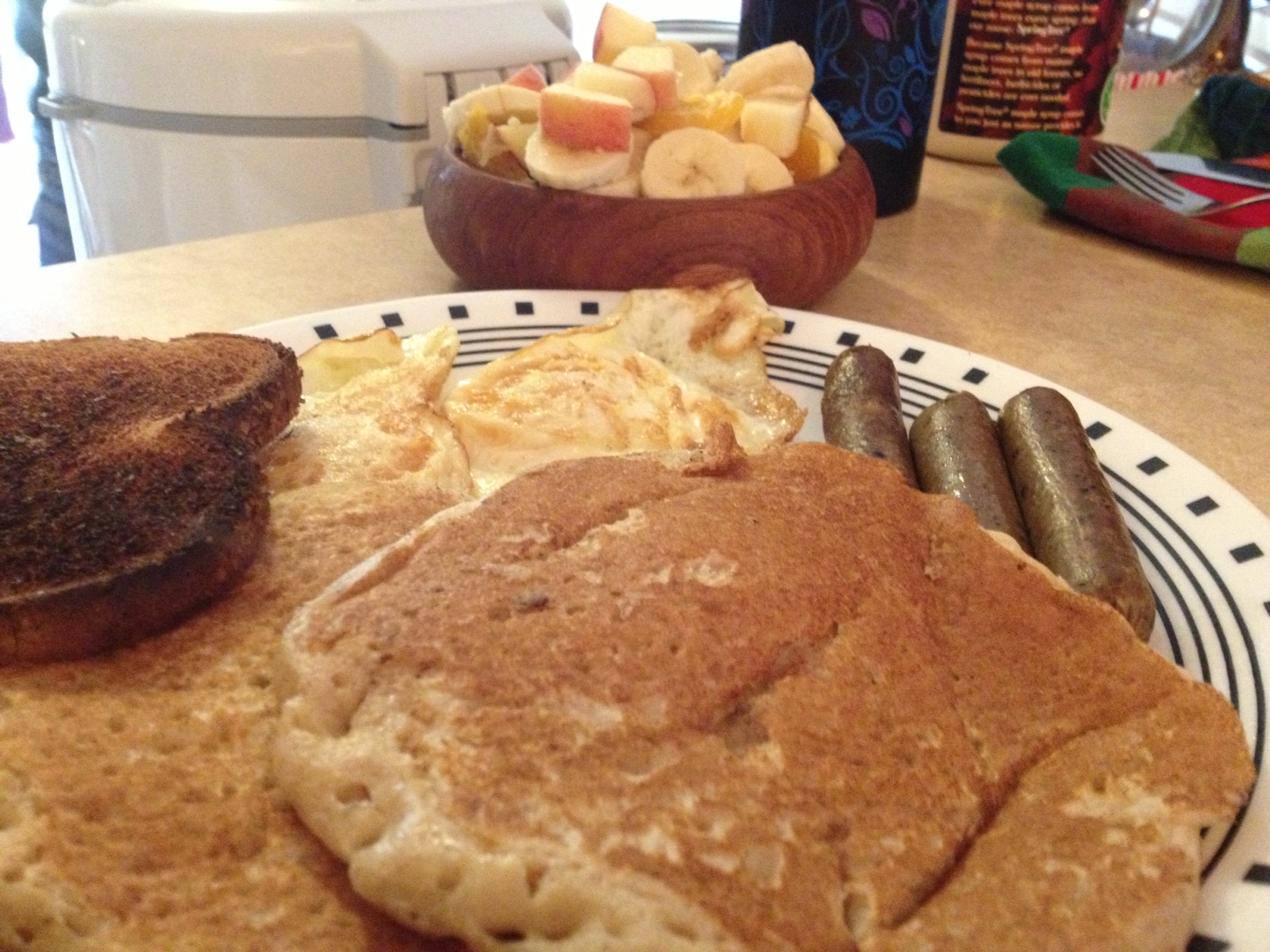
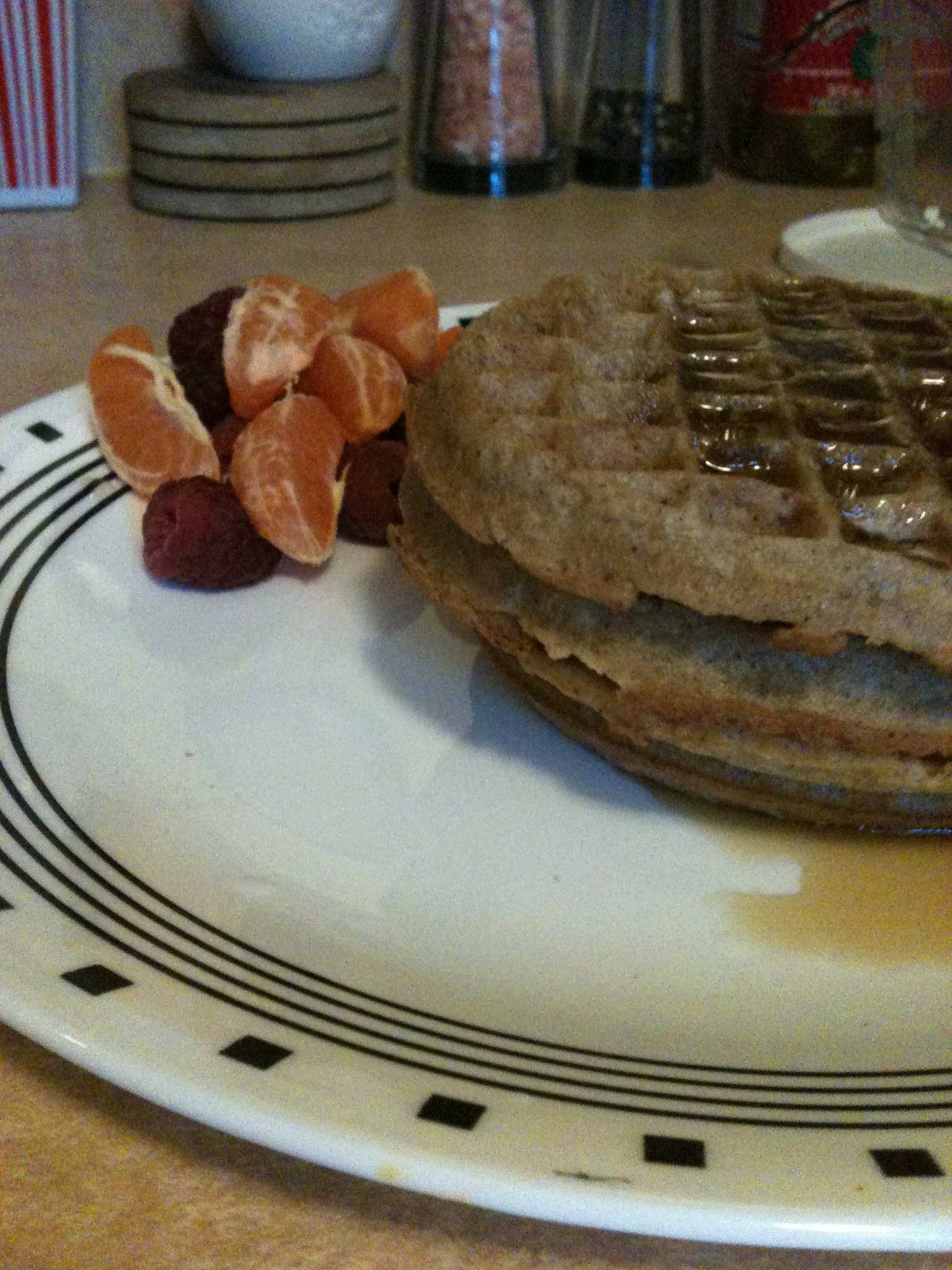
We like to go big on breakfast when we can. This is (not necessarily our typical) our ideal breakfast: whole-wheat Kodiak pancakes (or waffles), eggs, whole wheat toast with jam, Morningstar Sausage Links, and a big fruit salad. Sounds like a lot? You can bet our metabolism is going to be booted up from the start? And yes, I usually can’t finish everything so Chris gets to clean my plate.

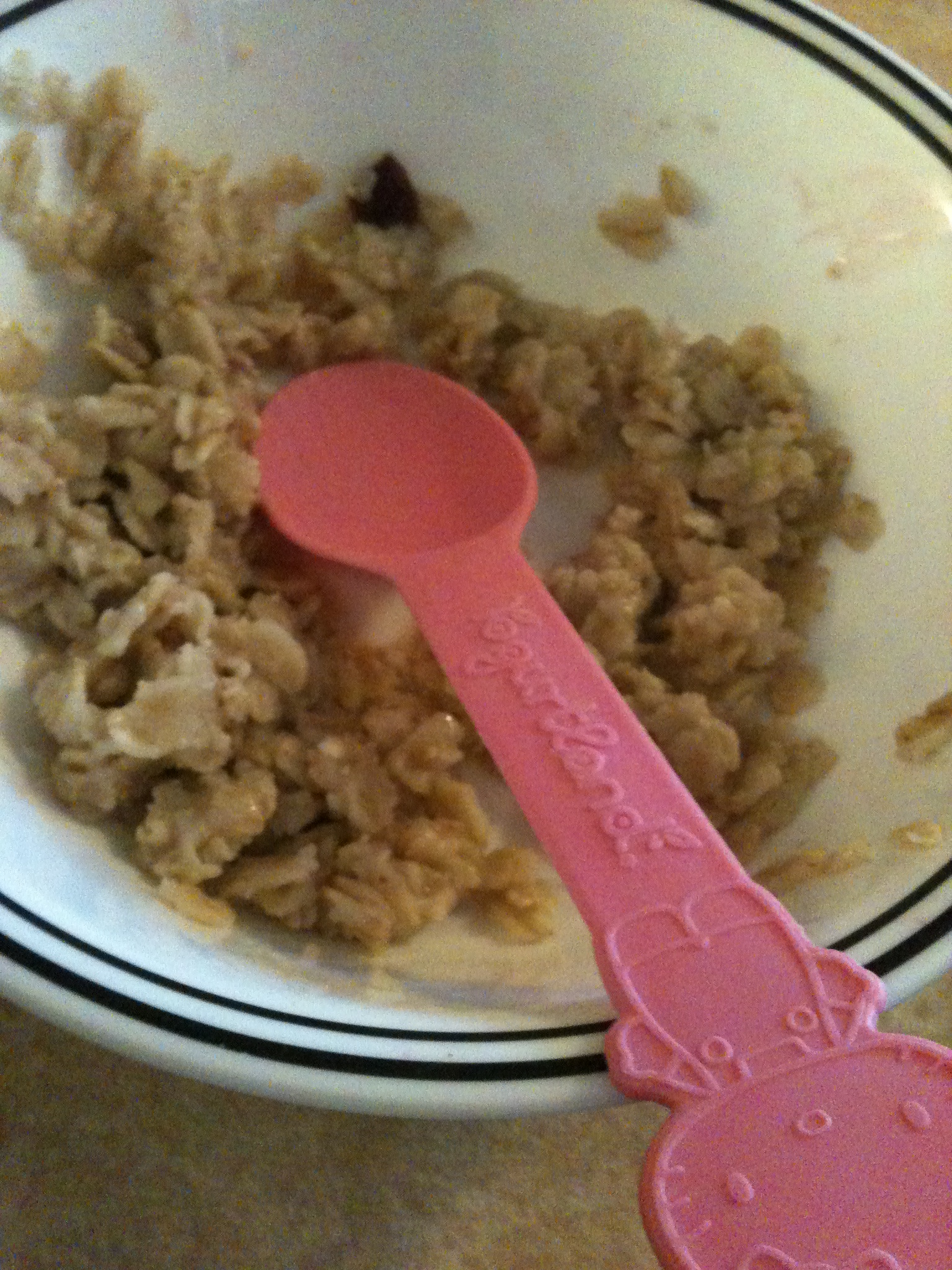
Not in the mood for a big breakfast? When I don’t have a lot of time before work and Chris is still asleep, I’ll usually make oatmeal, or greek yogurt with fruit and nuts, or an egg on toast, etc. Those all have plenty of protein and carbs for me to last until lunch or snack time.

Whatever you do, just eat something. Even if it’s just an apple as you run out the door. I promise, it’s worth it and your body will thank you.

BONUS KITTY PIC 

spacer

Give Your Body [SPECIFIC] Love

Weird title, right? For me, love has a lot to do with health, especially when it comes to one’s body. And it’s very important to love your body. And a way I do that is giving it great workouts. Why do I say specific love? Let me tell you.

A lot of people who aren’t really into fitness or go to the gym as a chore, typically do total-body workouts. Meaning that they will try to work each part of their body (from back to chest to legs, etc.) in one workout. And if you do that workout properly and hard enough, each and every muscle group will be sore.

So I have a question. What are you going to workout the next day if all body parts are sore?

Which is why I say SPECIFIC! You don’t have to be a meat head, a fitness buff, or even in shape to split workouts up properly. You’ll be amazed at how much more effective each workout will be. Usually spend 45 minutes on a total body? Imagine 45 minutes spent just on your legs. Now there’s some defined calves.

And specific doesn’t necessarily mean one muscle group each workout, it could mean two or even more. Usually, we split our workouts into two muscle groups each. For example, yesterday we did back and biceps. Another day we would do chest and triceps. Another day? Shoulders and forearms. Legs we usually keep by itself because there are several large muscles to work (calves, quads, hamstrings, glutes, etc.) And so on and so forth. I think you’re getting it. If you want, you can even split it into upper body and lower body workout days. But that will only work if you’re only working out 3 or so days of the week.

By the next day, you’re going to be sore in whatever you worked out. And by the second day after, you should be even more sore. But soreness to me equals happiness, because I know that muscle group is getting stronger. I’ll keep using us as an example. So we worked our back and biceps last night (great workout by the way), which are going to be sore today and tomorrow. Thus, tonight we will most likely work out chest and triceps, core, or something else.

There are so many pros to this way of working out and a very slim amount of cons. The specific muscle groups will get stronger by isolating them, they will develop more quickly, gain endurance, and toning. You will not have all body parts feeling sore and tired thus preventing a good workout.

You have the ability to isolate your workouts. Do it! I hope you can now understand how much better it is. AND it also makes it easier to plan out your workouts, thus making it easier for you to actually workout. I find it’s always easier to follow a workout plan (even if I’m feeling meh that day), because it’s written down what I’m going to do. Trust me, just try it.

Tell us which muscle group is your favorite to workout!

spacer

Let the Haters Hate but Keep Working Out

So, we were in the BRC last night working out, even though it took over an hour to motivate ourselves to get dressed and go. A, we were tired from a week of hard work. B, it was really cold out. C, it was the first Friday night of the month, so people either were here from gym trade or paid $8 to boulder for the night. (It’s really busy Friday nights) Nevertheless, we found ourselves in the weight room first.

We did a great back and chest workout. It was probably our most extensive workout in five to six months. Many exercises, many sets, many reps, great form, great pumps, no injuries or serious pain, and a wide variety of muscles hit. We often did super-sets alternating from chest to back exercises, a technique that can stretch out your opposing muscle fibers in order to make greater gains while you lift for the opposite. While we were doing decline bench press, some little guy who came in the weight room with a girl he was trying to impress did one exercise but made one stupid comment. First, I’m not being mean saying little guy.

English: an exercise of chest

Regular chest press

He was an older man (30s or 40s) a shorter man (5’5′) and a lighter man (100 lbs) but he was wearing some SERIOUS climbing gear and most likely had some great strength to weight ratio. That happens with a lot of smaller guys, they can handle their body weight very well, which is something everyone should aim for as a goal. At the same time, I don’t think it’s a smart idea to limit your body’s growth by trying to stay small, because you could be sacrificing overall power, whether it be great strength, speed, or explosiveness. Picture this, he can do 100 pull-ups with his body weight but what would happen if he ran into a coyote up on the foothills? He’s dinner. But back to what actually happened (I have nothing against smaller people!)

English: Coyote at Ridgefield National Wildlif...

Dinner!

Second, at some point while showing her how to do an upper-body elevated push up on gymnastic rings, (again, while we were doing decline bench) he said, very loudly and out of the blue, something along the lines of… “by doing this, we’re actually building/using practical pectoral/chest muscles.” Practical pectoral muscles… doing elevated ring push ups… Really? I am a very protective and defensive person, and I generally hate know-it-all people, even if they have a basis for their claims. More so, I hate those people that will smack talk everywhere and anytime except to someone’s face. (This guy’s aura made him seem like one of these people.) Was he trying to make himself look bigger in front of his lady-friend by putting us down? Tisk tisk. Let’s look at what would have happened if we discussed his comments face to face, because he obviously meant for us to hear it, little did he know that we know more about this stuff than he does.

There are two major muscle groups in the pecs, and although there are a countless number of exercises to work various areas in those groups, and hit every muscle fiber in the process, we were nearly working out the same muscles. His exercise, performed properly, targets the upper chest. (Inner, mid, or outer depends on the width of the rings.) Our exercise targets the lower chest, with the same width principle. By using an Olympic bar, we are not trying to build our stabilizer muscles in our shoulder joint, but by using dumbbells (or to a lesser extent rings) you can strengthen MORE stabilizers. That does not mean that we aren’t also strengthening SOME stabilizers, but throughout our workout we did plenty of work with dumbbells for them. We ALSO did some elevated push ups of our own before he got there, but he didn’t know that… no surprise.

Rectus sternalis and the great pectoral chest ...

Chest

Next, I’d love to figure out what he meant by practical chest muscles, since anatomically he failed already. He must have been talking about how we would use these muscle groups that he doesn’t fully understand in real life, right? So, tell me this because it’s never happened to me. Have you ever needed, in the “real world” outside of a gym, to use gymnastic rings in order to push yourself upwards using your pectoral muscles? I highly doubt it since gymnastic rings aren’t just hanging around everywhere in pubic. From our point of view, have you ever needed to push an object that fell on your chest off of you, whether it be a log, sibling, car, or anything else? Our scenarios might not be totally likely but they are certainly more plausible than that one for the rings, so who is actually working out more practical muscles?

So next time you find yourself in the gym ready to say something stupid, loud enough for everyone to hear, think about it for just a second and ask yourself if you could actually defend yourself. Also, if you’re on the receiving side of some snippy comment, like we were, don’t let it get you down. Never let any bully in the gym make you feel bad for something that you’re doing, unless you’re risking getting hurt and they’re trying to help. (Anyone trying to help wouldn’t bully you, or else they aren’t really trying to help.) Instead, let it motivate you to put up 155 on your last set of the decline for 12 reps after 6 months of not hitting any type of bench press.

Raging Bully

Ignore them bullies

Let the haters hate, ignore them, and keep working out because you’re doing a phenomenal job and we love your effort!

spacer